Blog Posts
In this space I'll write and share photos of my time studying abroad as well as anything else I find interesting.
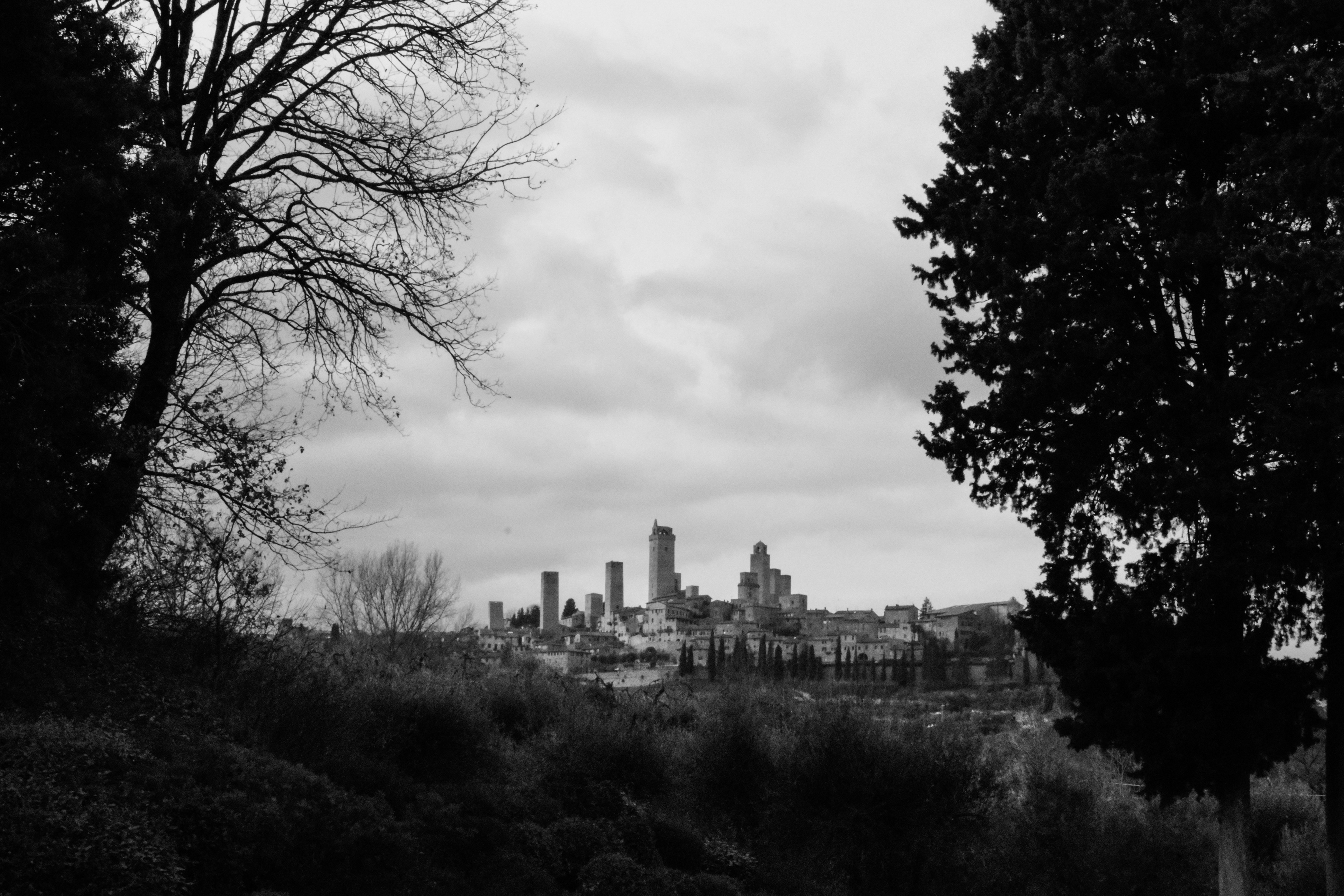
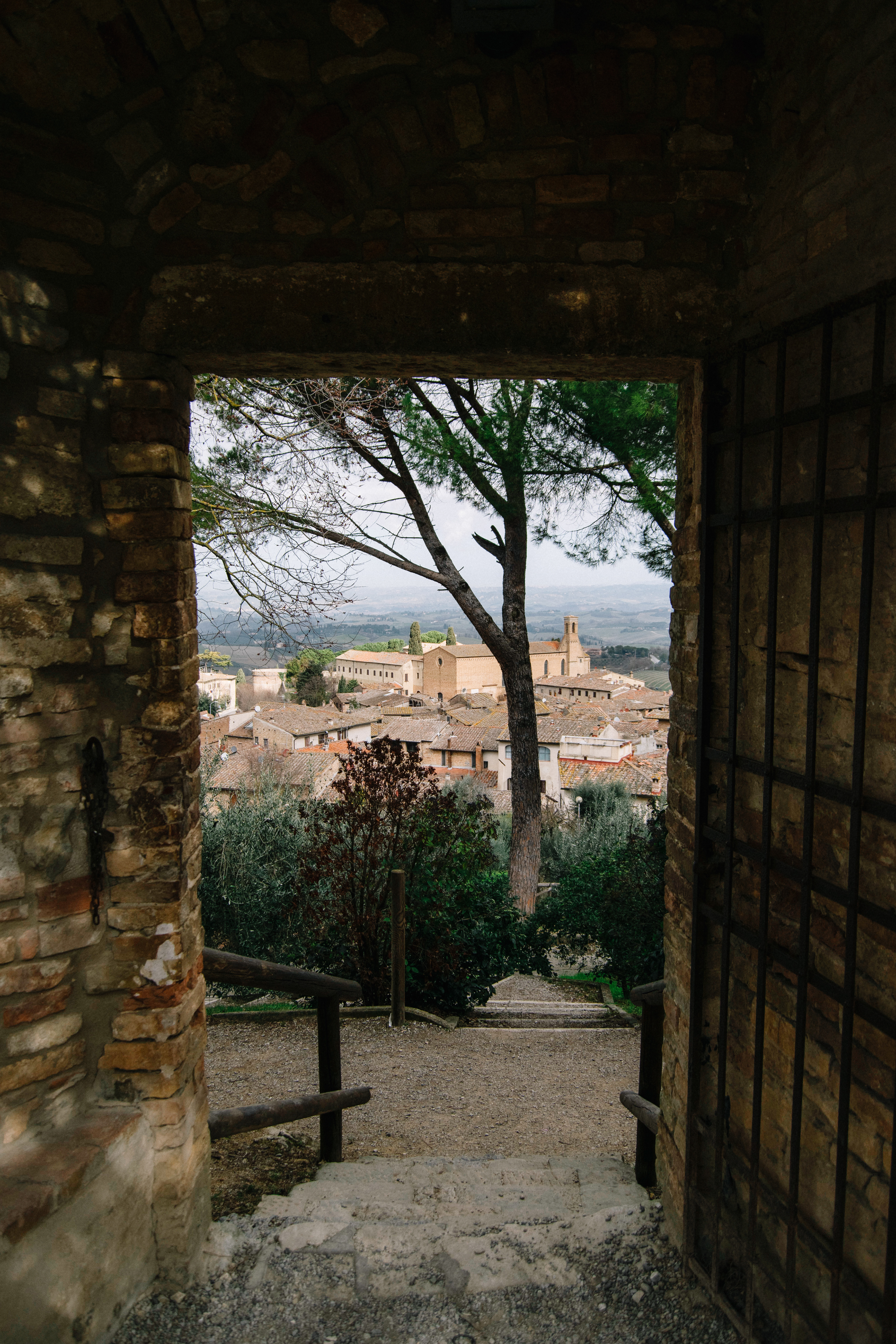
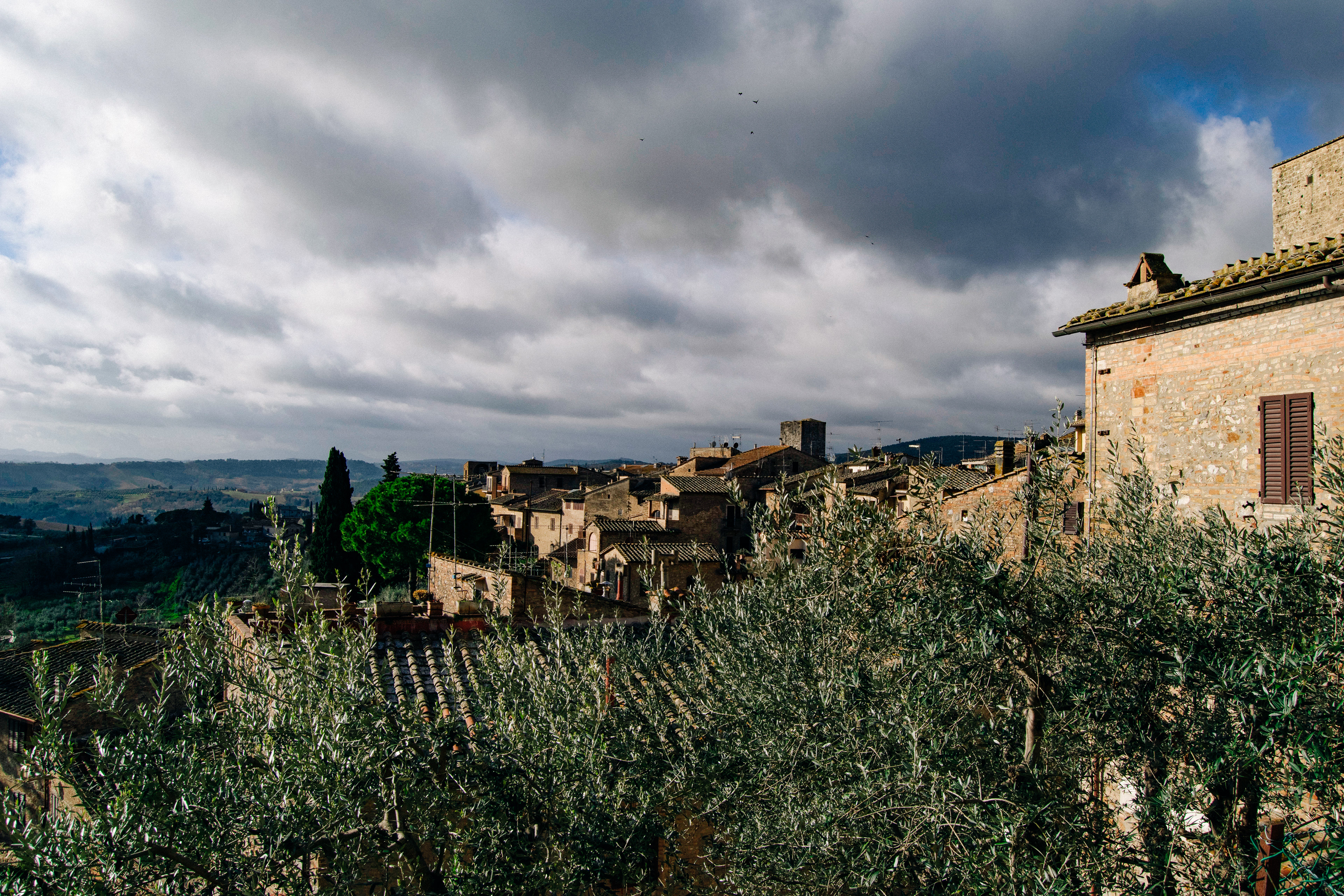
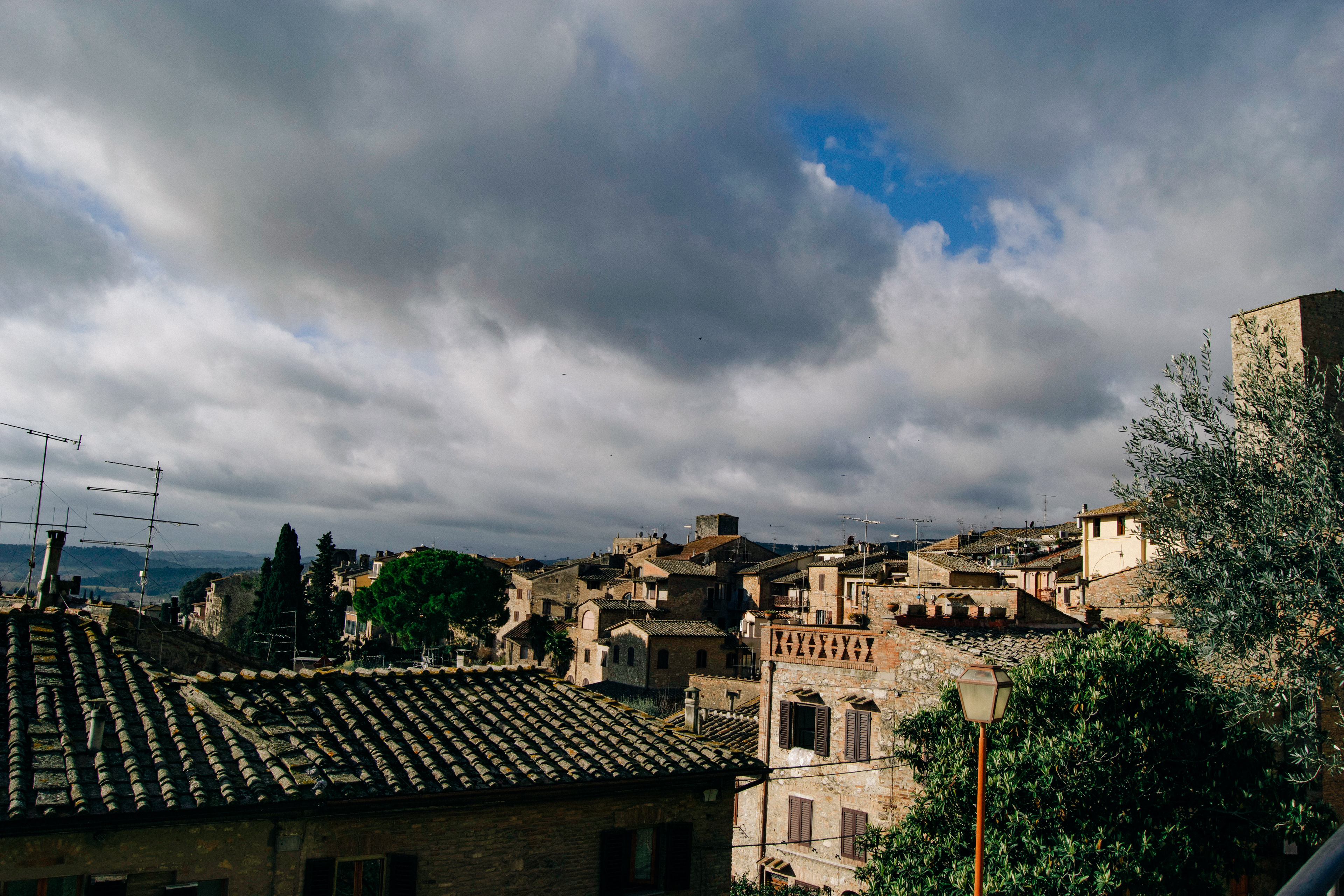
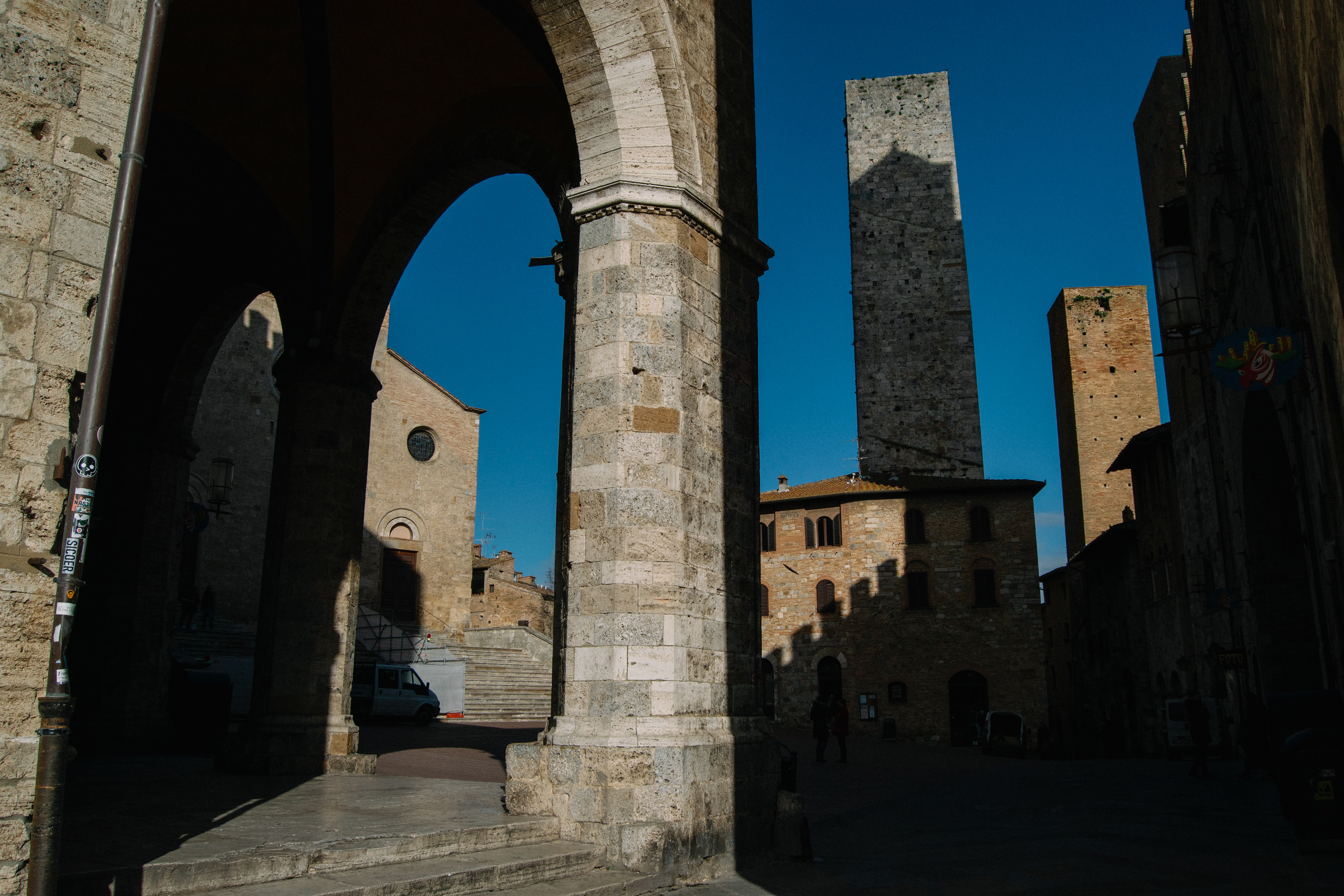
San Gimignano - "The Town of Fine Towers".
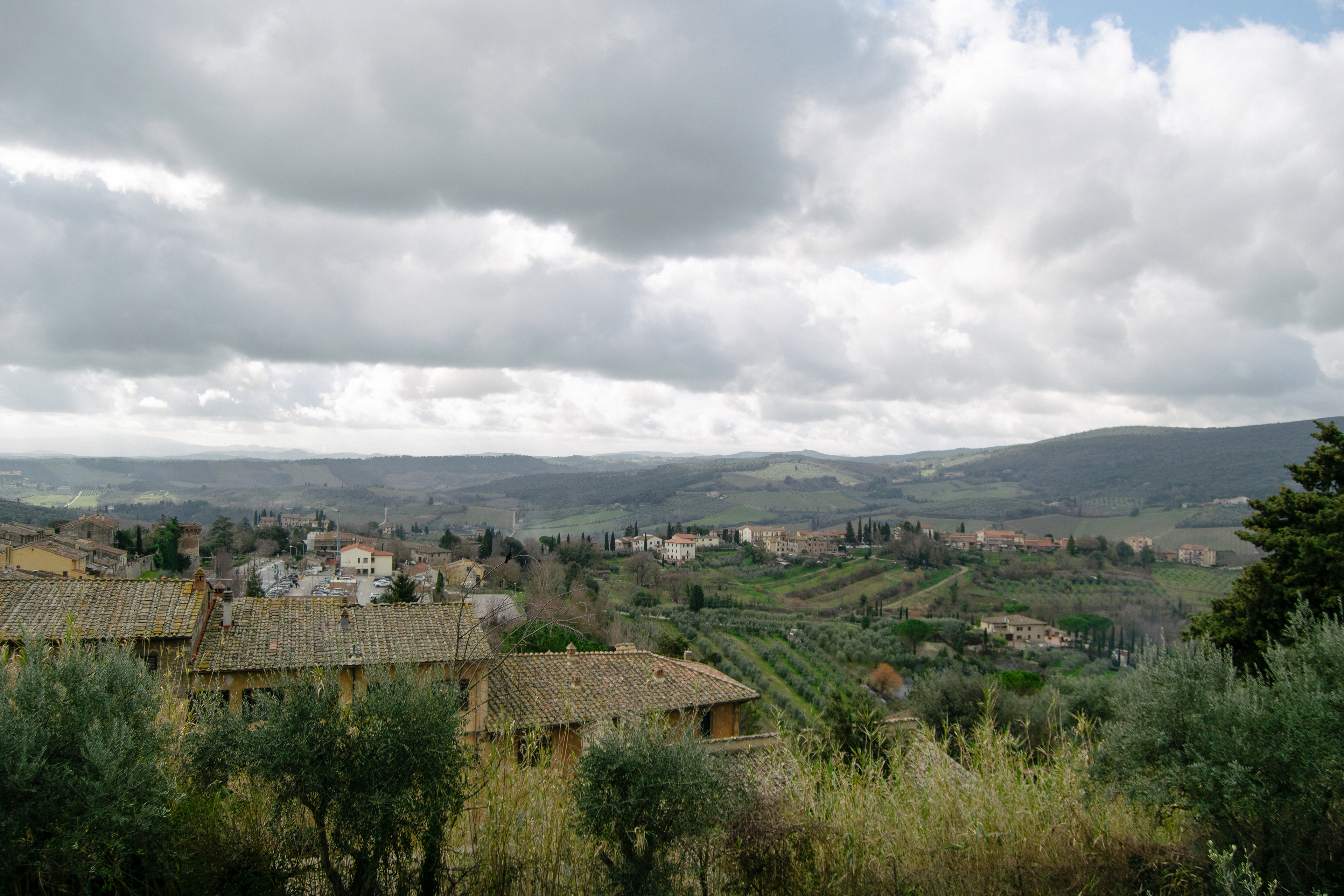
A small town of only 7,000, San Gimignano has a rich history sitting atop the Tuscan hills. Beginning in the 3rd century BC, Etruscan villagers settled in the San Gimignano area. Two patrician brothers, Muzio and Silvio fled Rome during the Catiline conspiracy to overthrow the Roman Senate in the 1st century. They built castles at Mucchio and Silvia. The town's name changed from Silvia to San Gimignano in 450 AD when Bishop Geminianus, the Saint of Modena protected the castle site from followers of Attila the Hun.
In the proceeding centuries, a wall was constructed around the town as the village began to grow. Maybe most notably, San Gimignano was used as a mid-point for Catholic pilgrims between France and Rome and the Vatican. Production of saffron, ham, and wine boosted the town's development. The town saw continued success till the Black Death, during which it submitted to the rule of Florence. Many of its 70+ towers were reduced in size during this time, and today no more than 15 or 16 remain. For centuries it was the "Manhattan of Tuscany" and the preserved medieval towers that loom over the surrounding countryside assert the town's history.
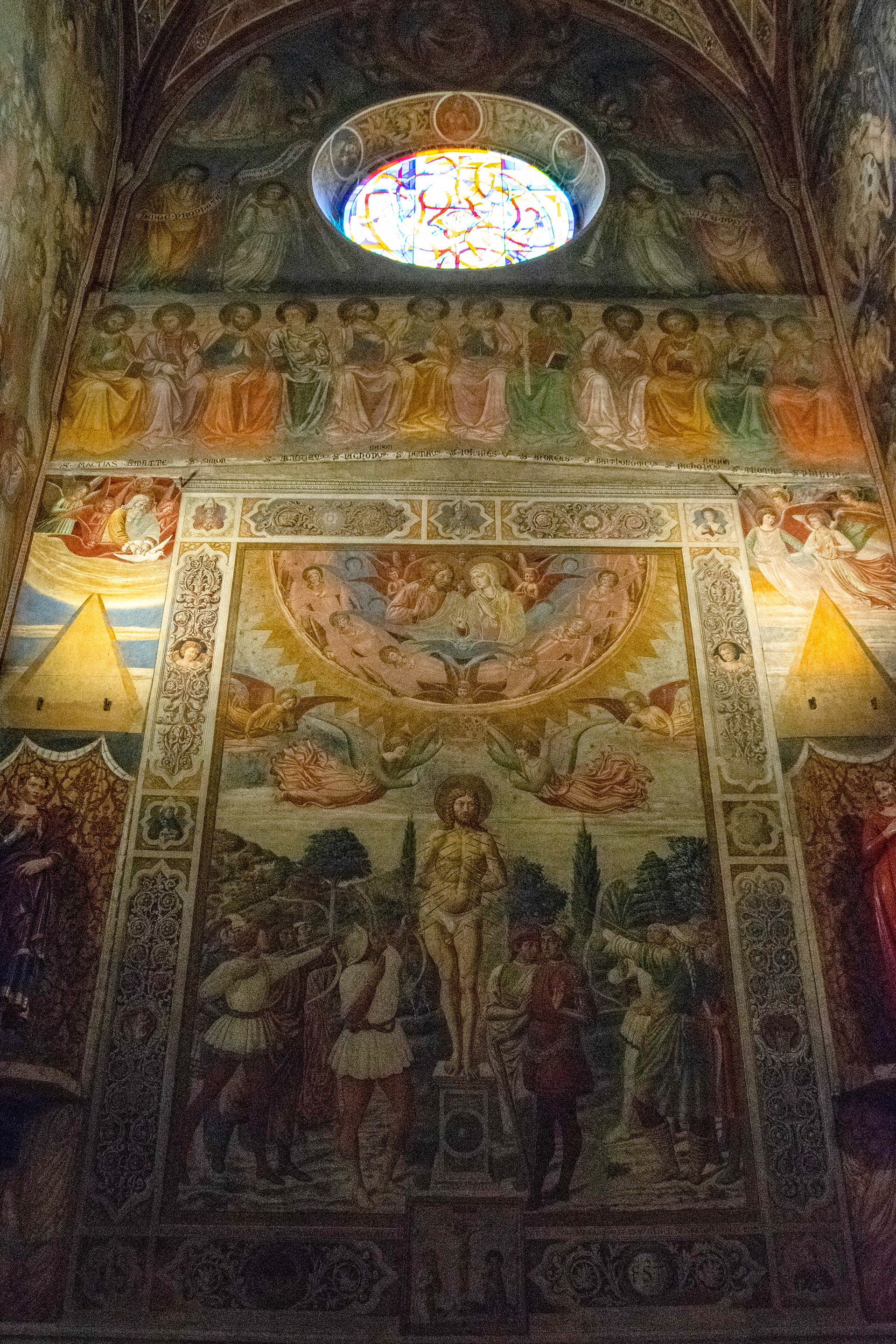
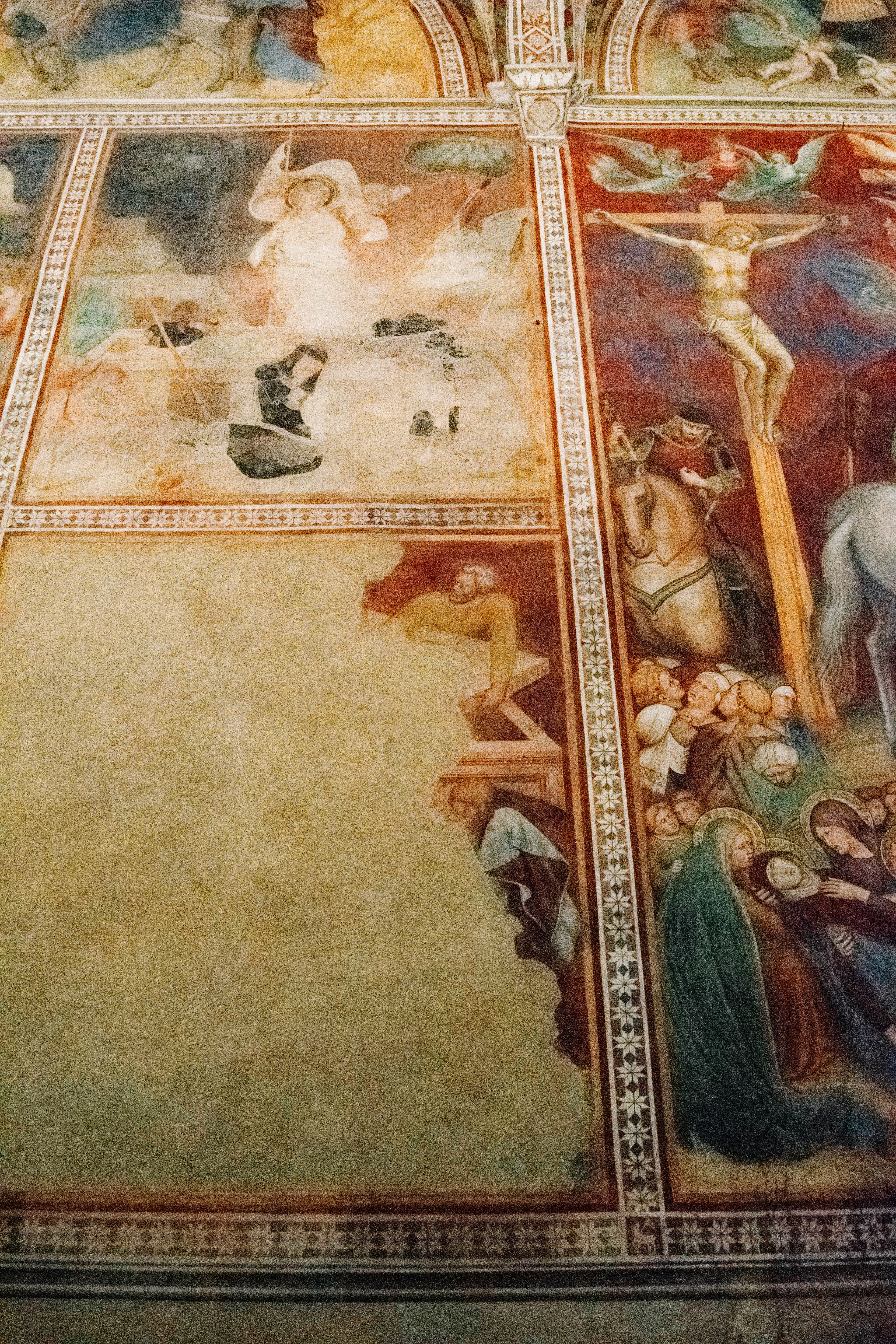
The Collegiate Church of San Gimignano in the town's central Piazza del Duomo features frescos by Domenico Ghirlandaio, Benozzo Gozzoli, Taddeo di Bartolo, Lippo Memmi and Bartolo di Fredi. The basilica is located within the "Historic Centre of San Gimignano" UNESCO World Heritage Site. Looking at the alter, there is an Old Testament cycle (1356) on the left and a New Testament cycle (1335-1345) on the right. Both frescos feature three levels with up to 12 painted panels per level. On the back wall is the Martydom of St. Sebastian by Gozzoli, painted 1465. At the order of Roman emperor Diocletian, St. Sebastian was tied to a tree and shot with arrows. However, he survived the execution and was saved by Saint Irene of Rome. Soon after though, Diocletian got word that the Saint had survived and he was subsequently clubbed to death.
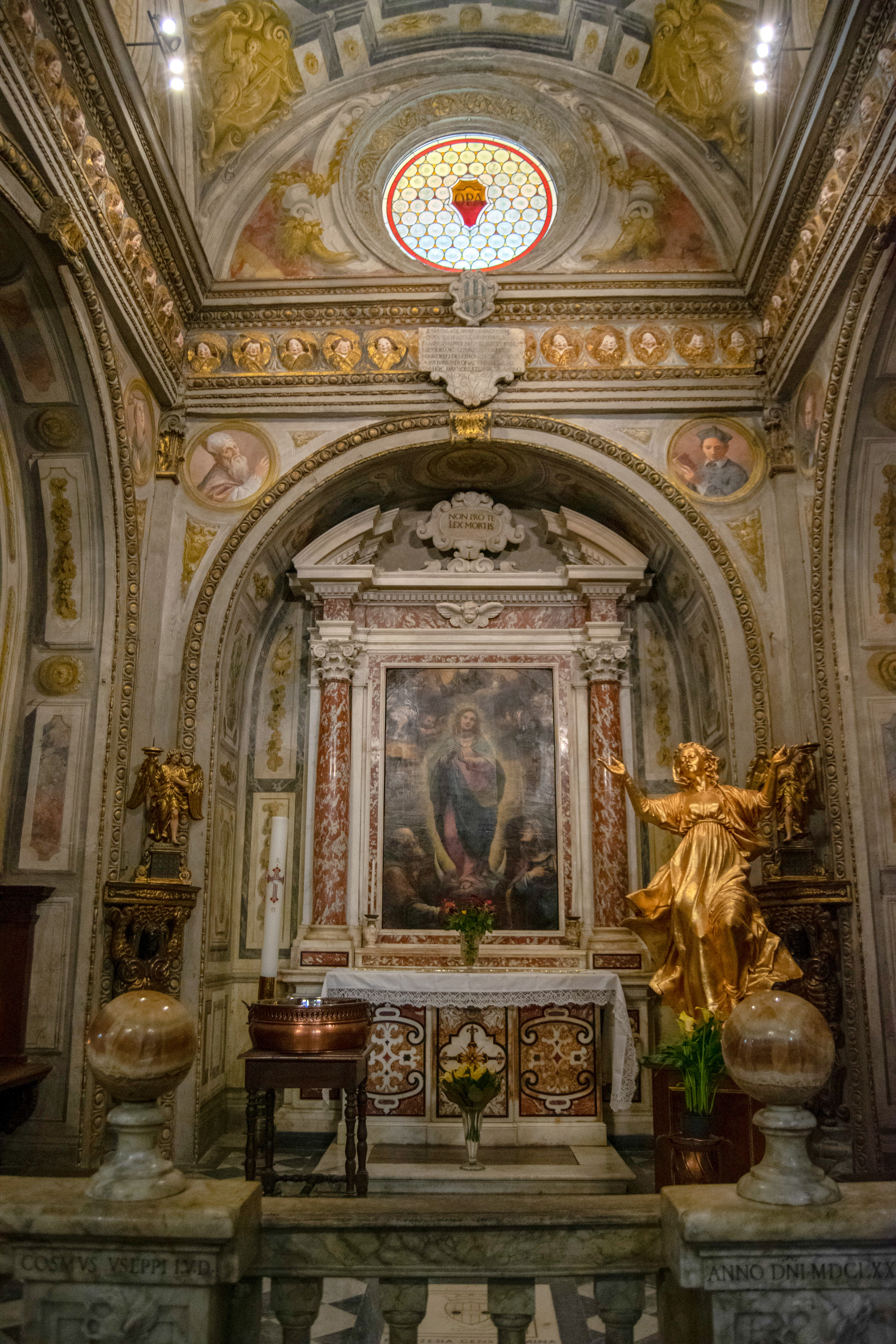
The Chapel of Santa Fina in the Collegiate Church tells another story. Serafina was a girl from San Gimignano known for her piety, and is now locally regarded as a saint. She contracted a disease in 1253 at the young age of 15, but her death led to two miracles. Eight days before she died, she had a vision of Pope Gregory telling her death was near. On her death bed, she touched and healed a nurse who had been caring for her and suffered paralysis. Then, on the day of her funeral a blind choir boy regained his vision after touching her feet. The wooden plank she laid on everyday while dying from disease is shown within the chapel.
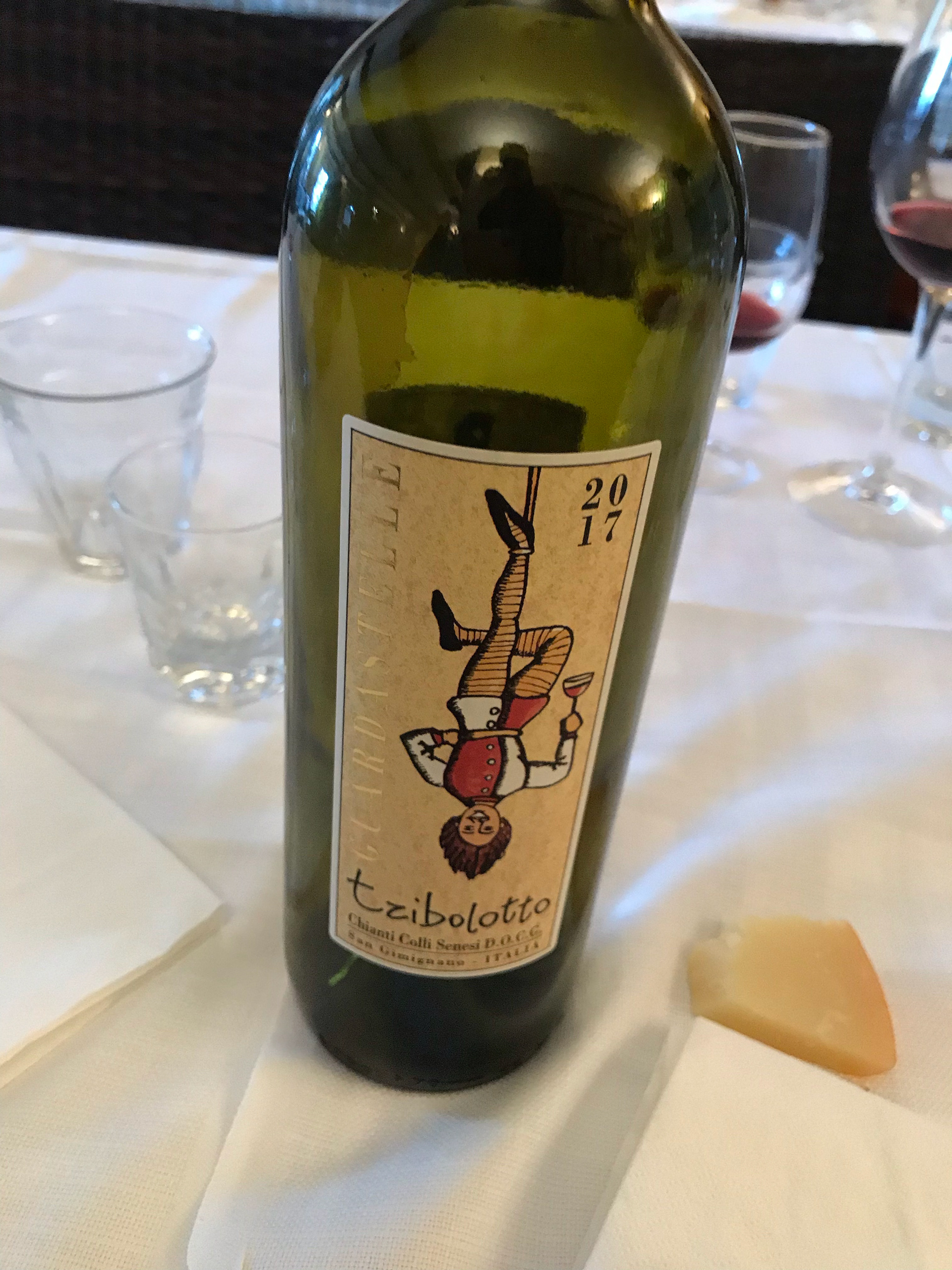
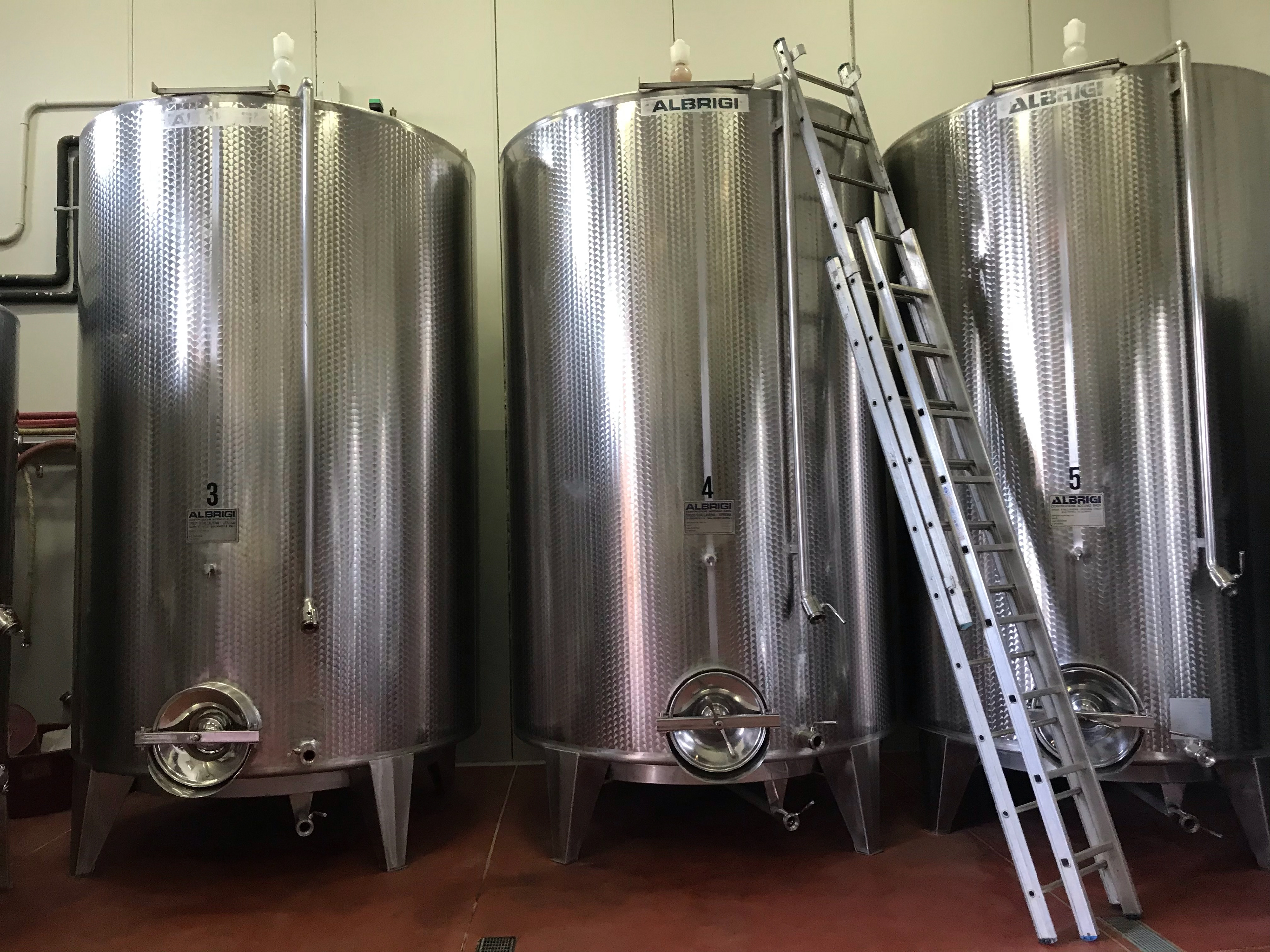
Just outside San Gimignano lies Guardastelle Agriturismo & Vineyard. Here they have the unique ability to grow both red and white wines due to the fossilized soil. Family owned by the Sestilio's since 1984, they produce around 15,000 bottles of wine a year. They separate themselves from the countless other wineries in Tuscany by using only natural fertilizers and harvesting and production methods. Before growing season, they trim all the vines and let the excess branches fall to the ground. The wine cellar features steel fermentation vats and oak barrels where the wine production takes place. Additionally, the farm produces extra-virgin olive oil.
February 21, 2020. Edited with Adobe Lightroom.
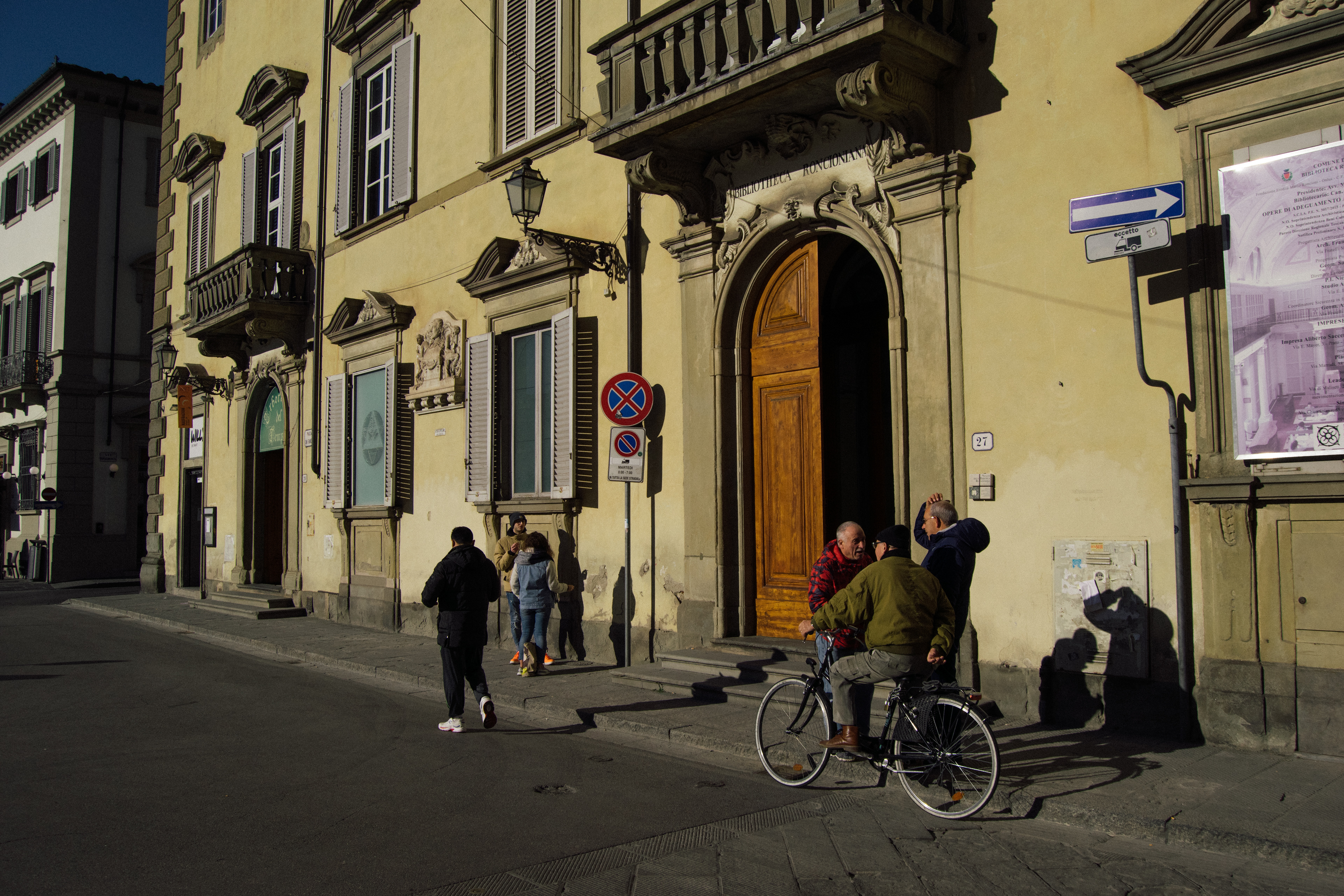
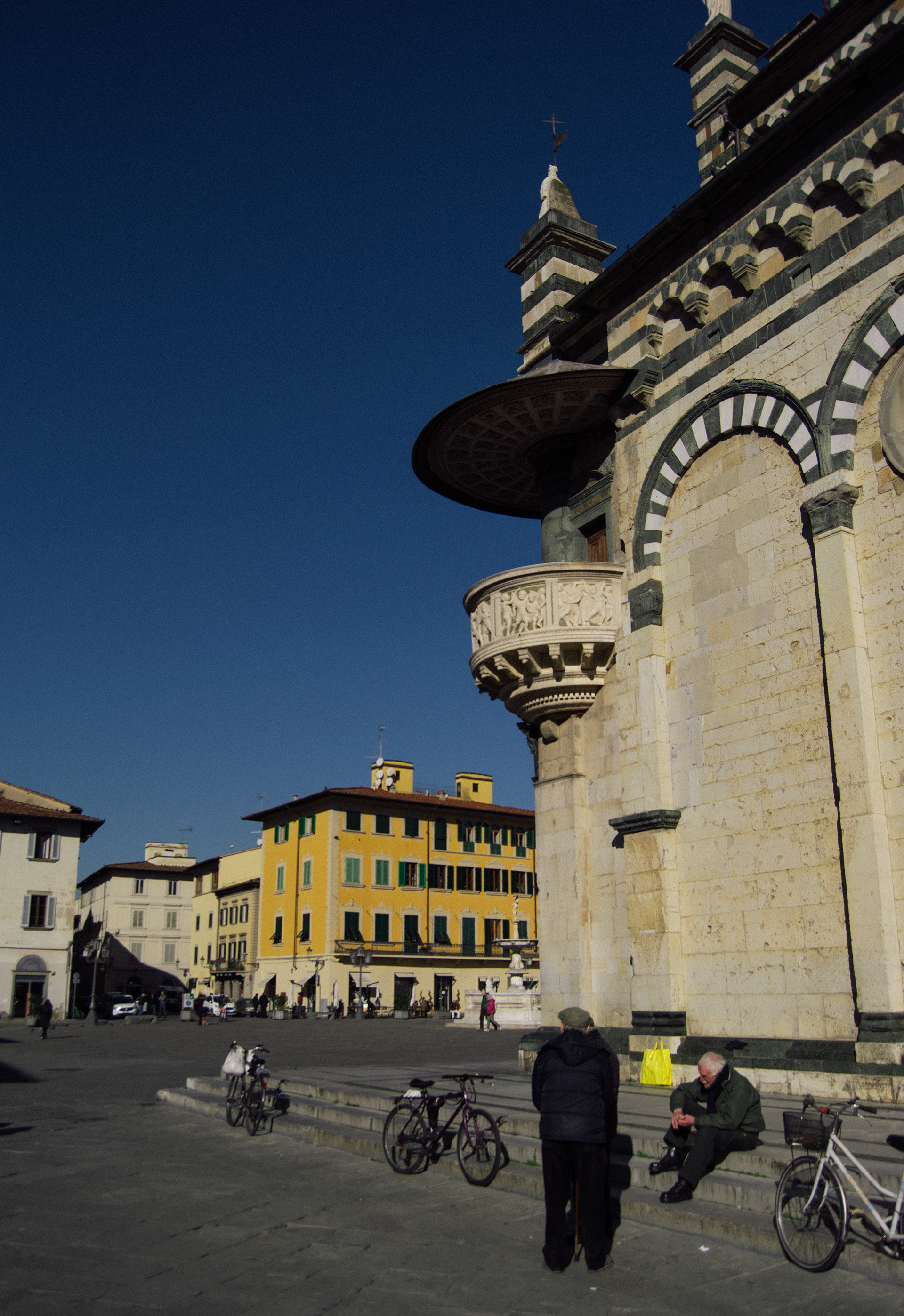
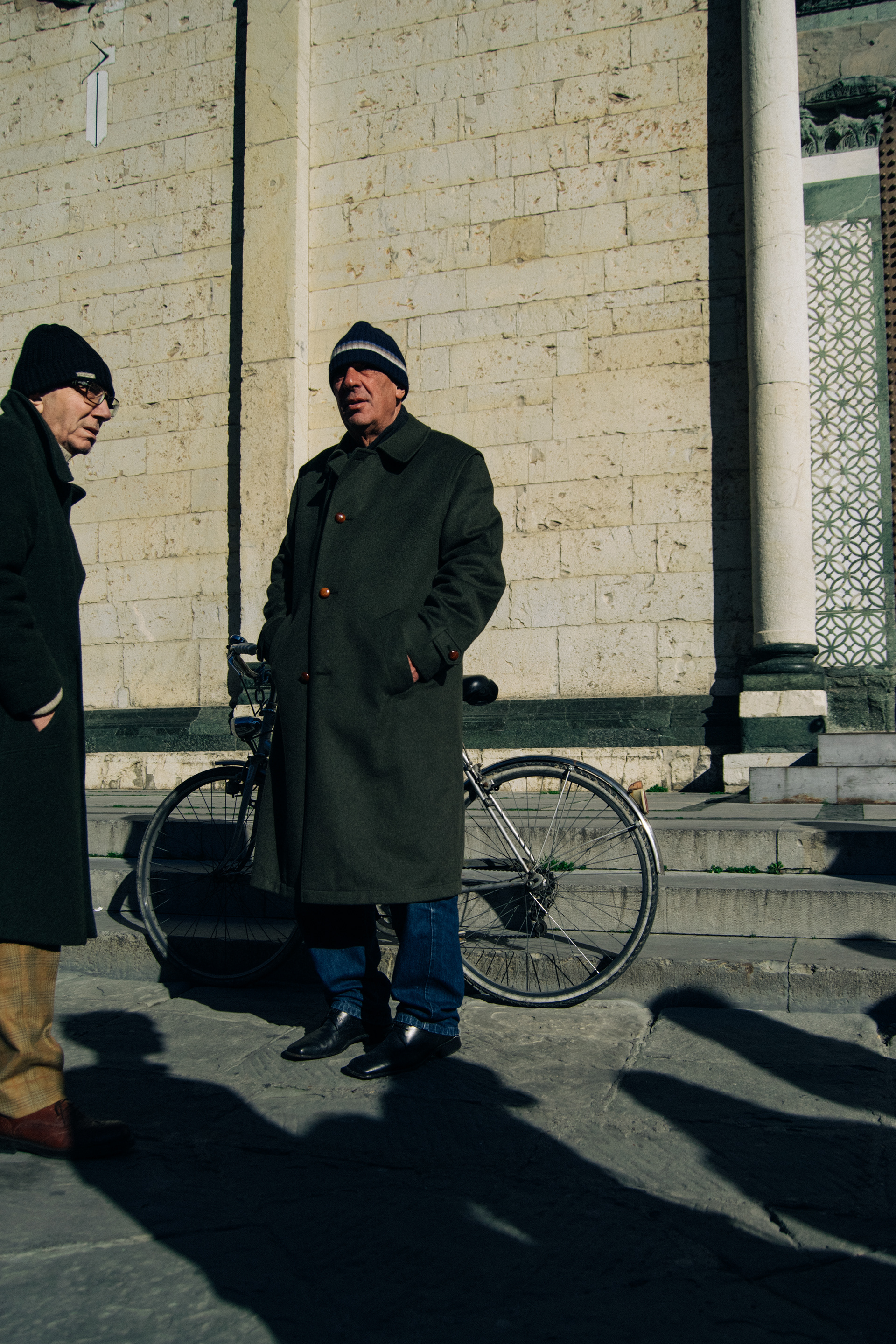
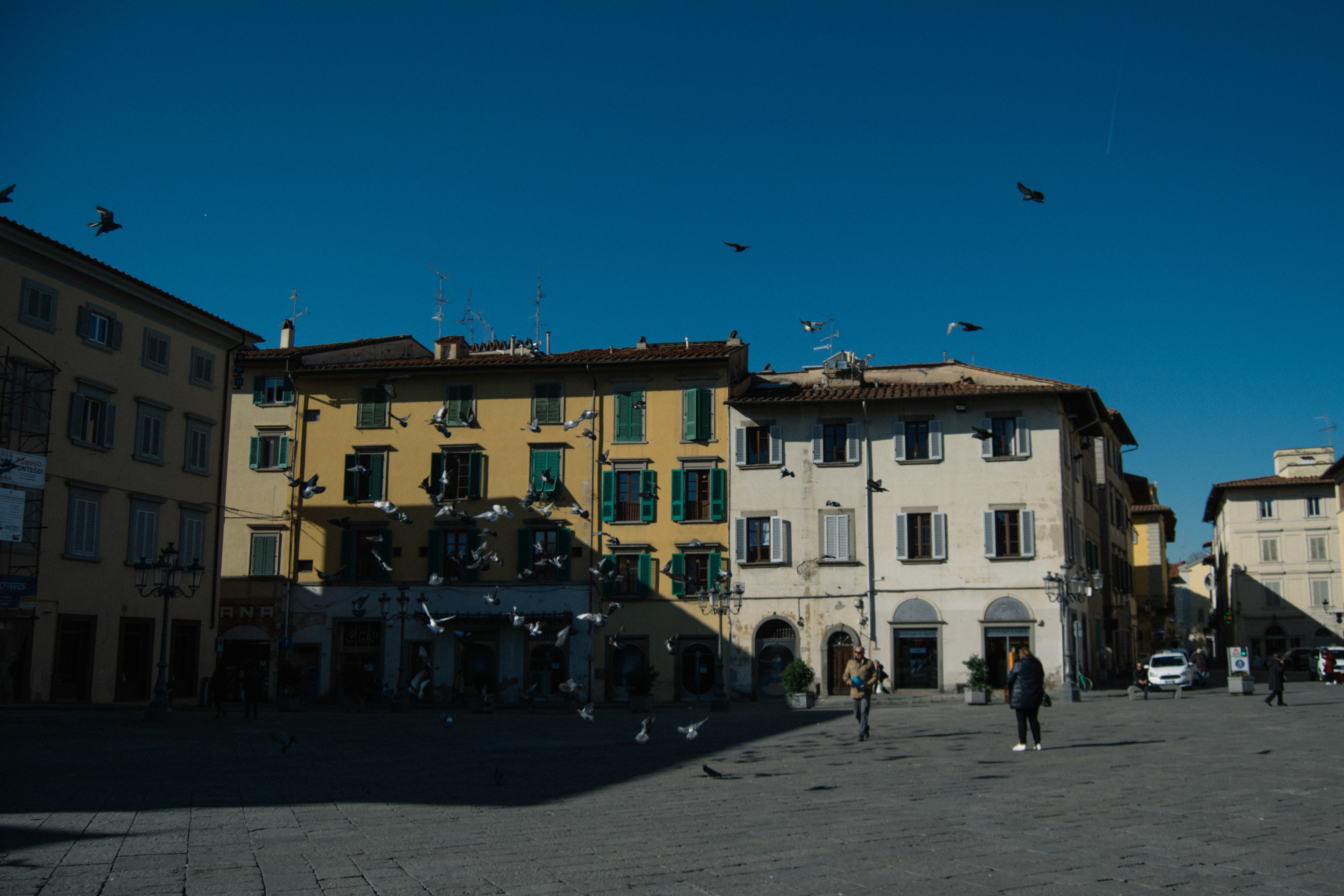
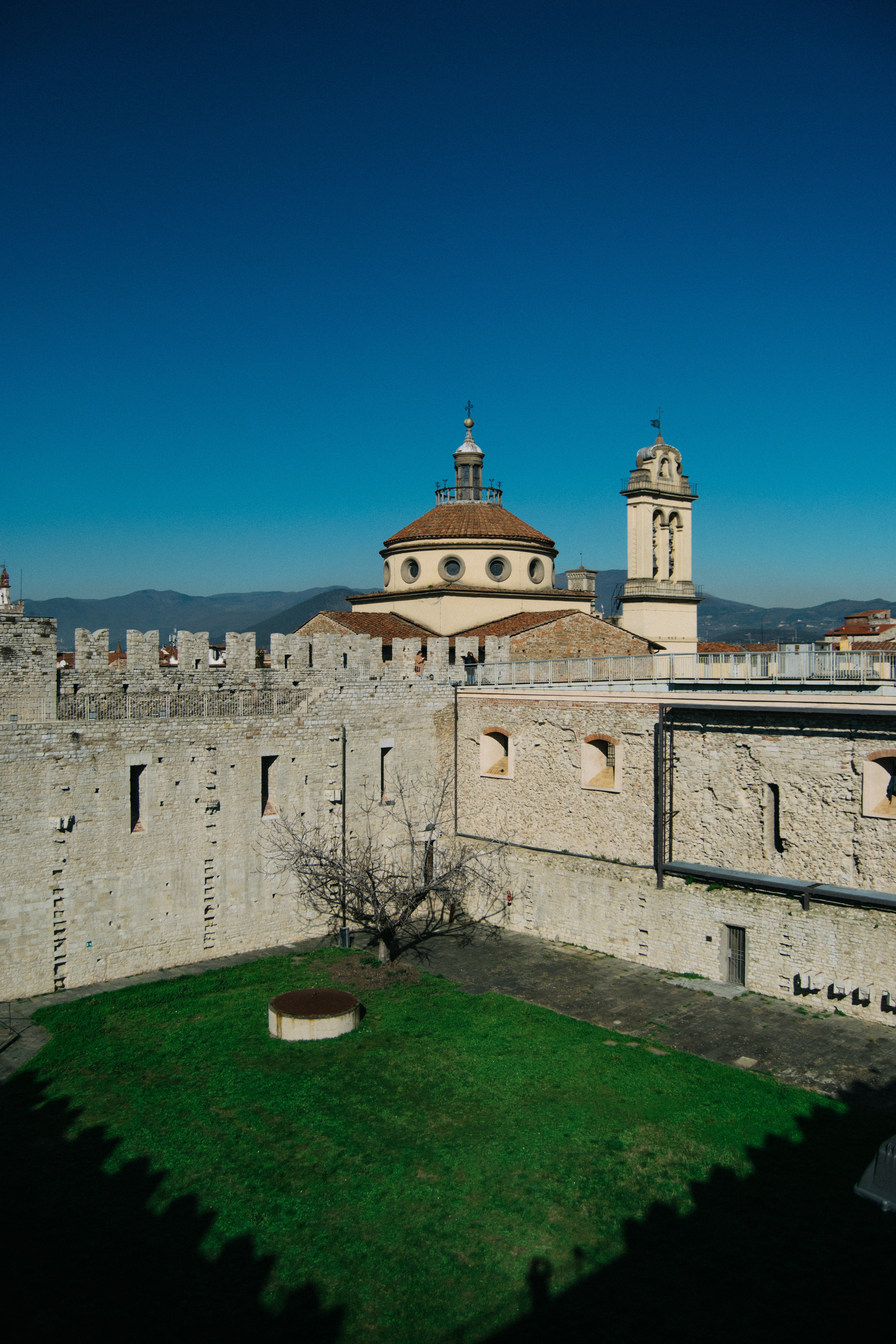
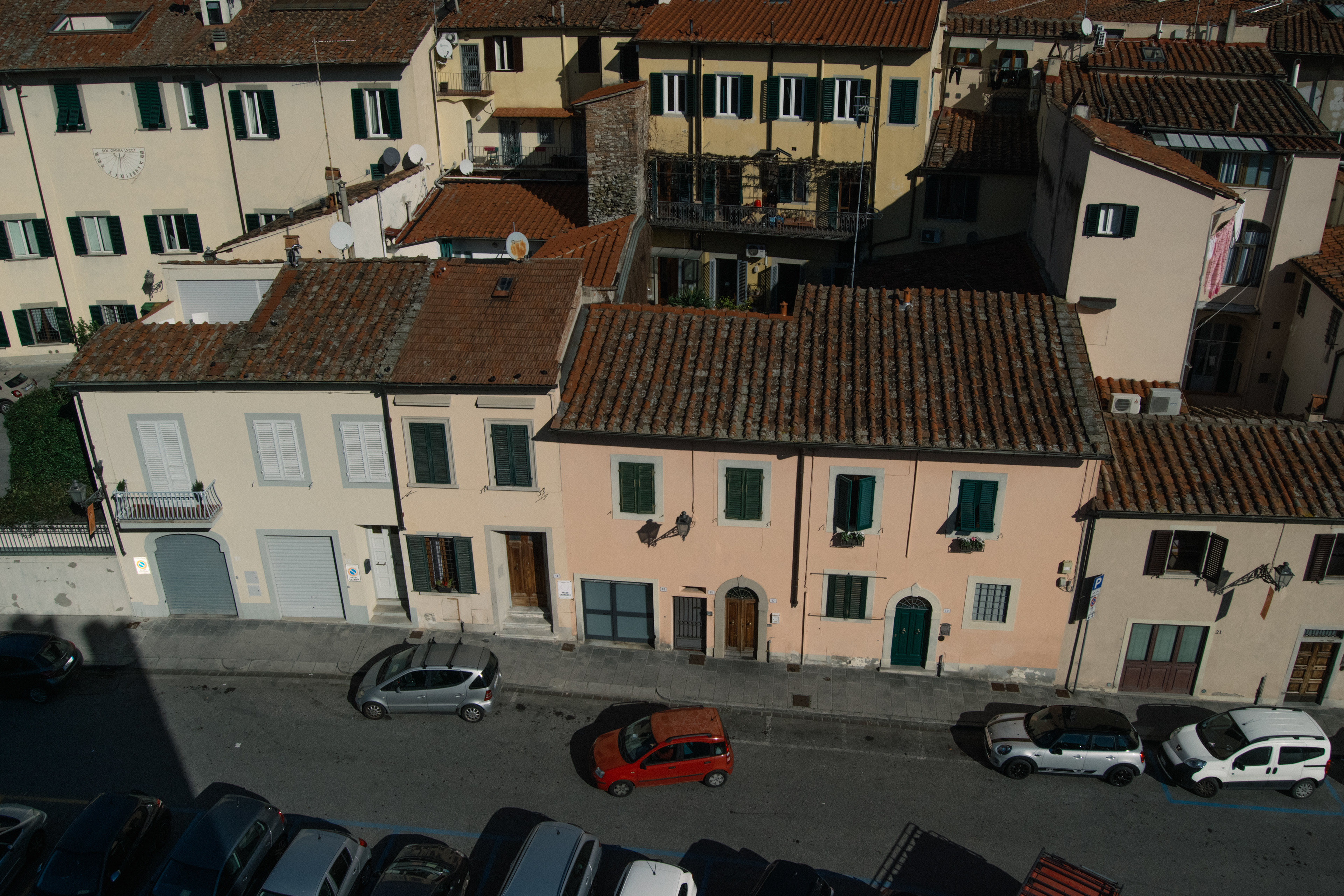
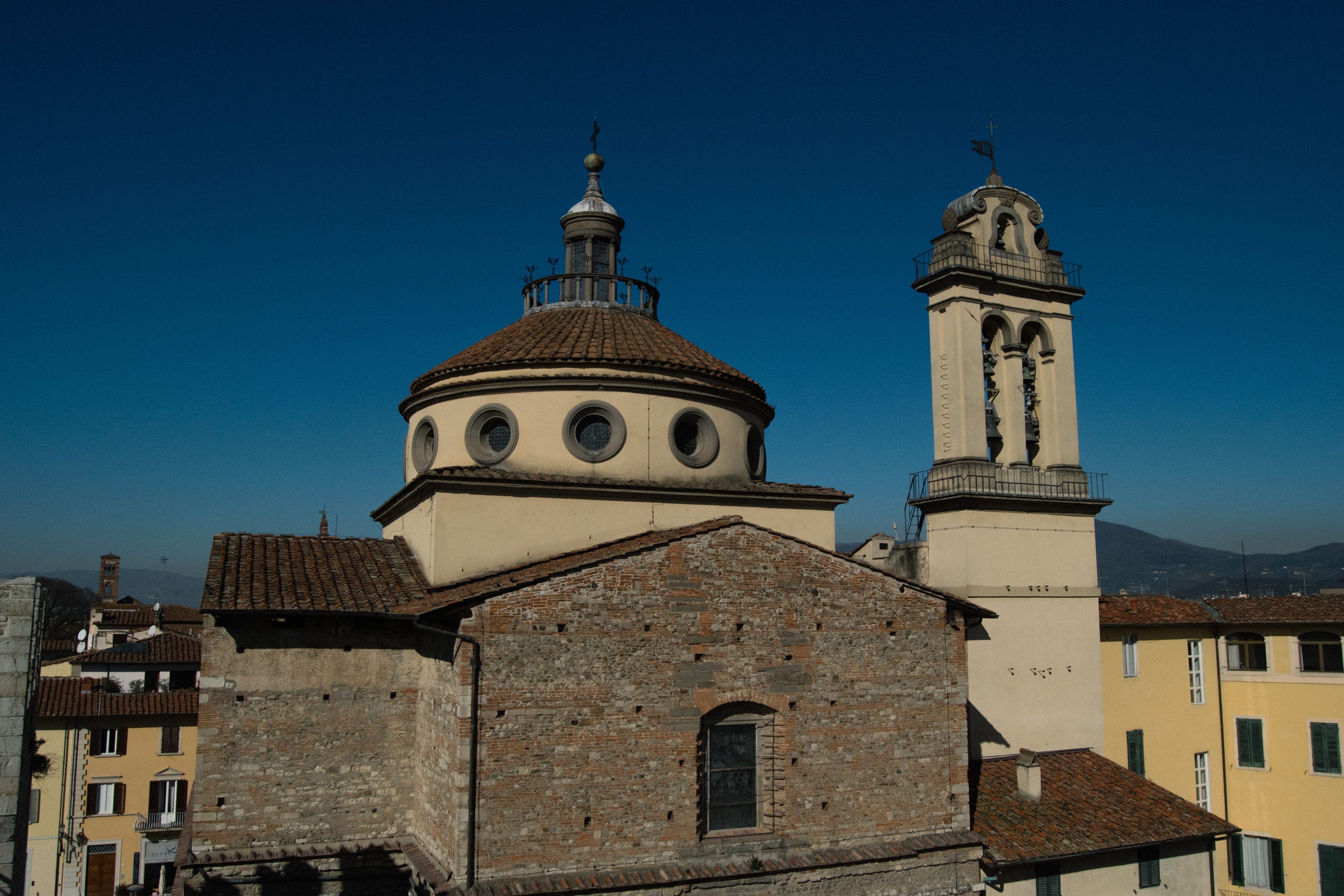
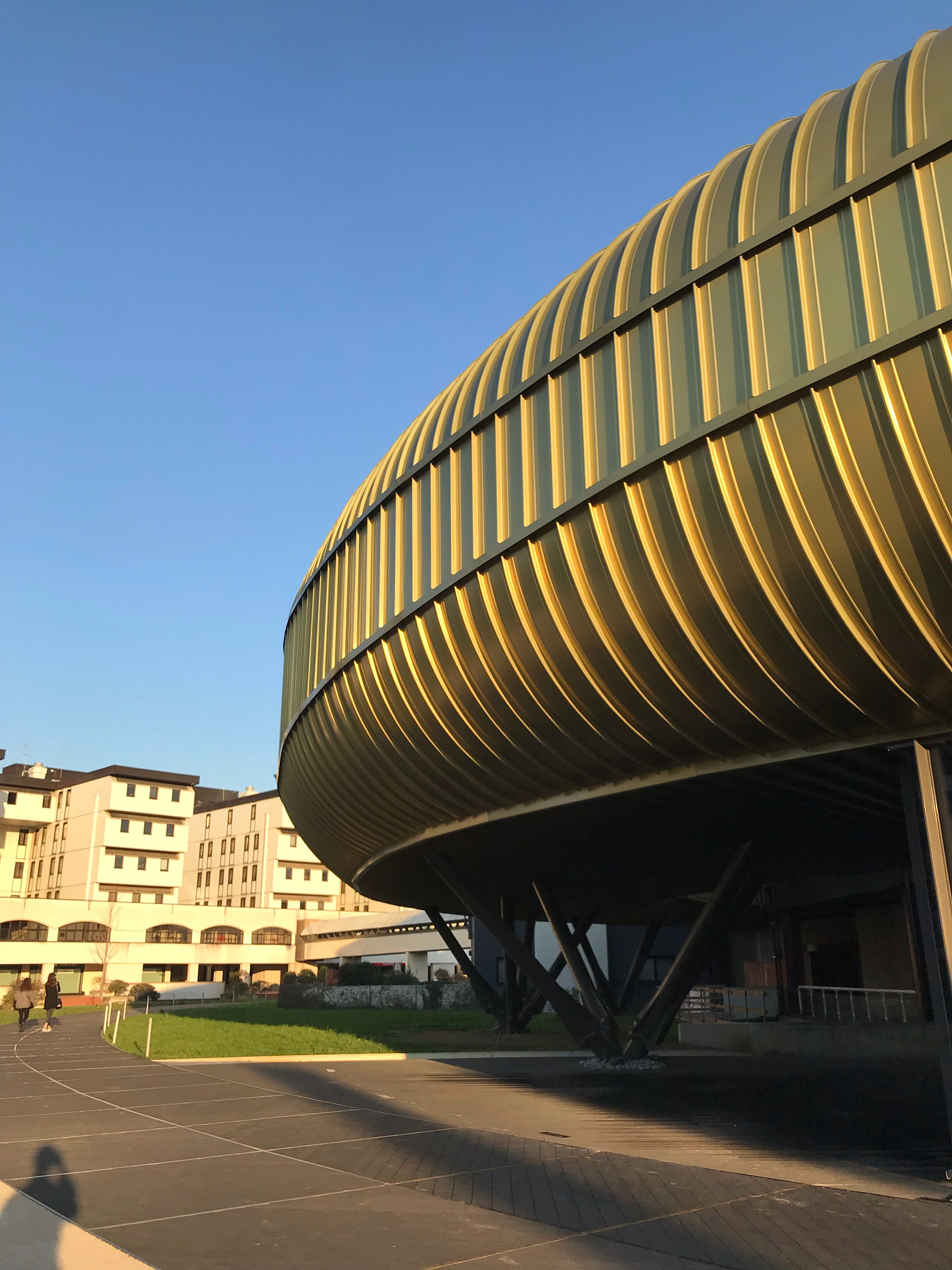
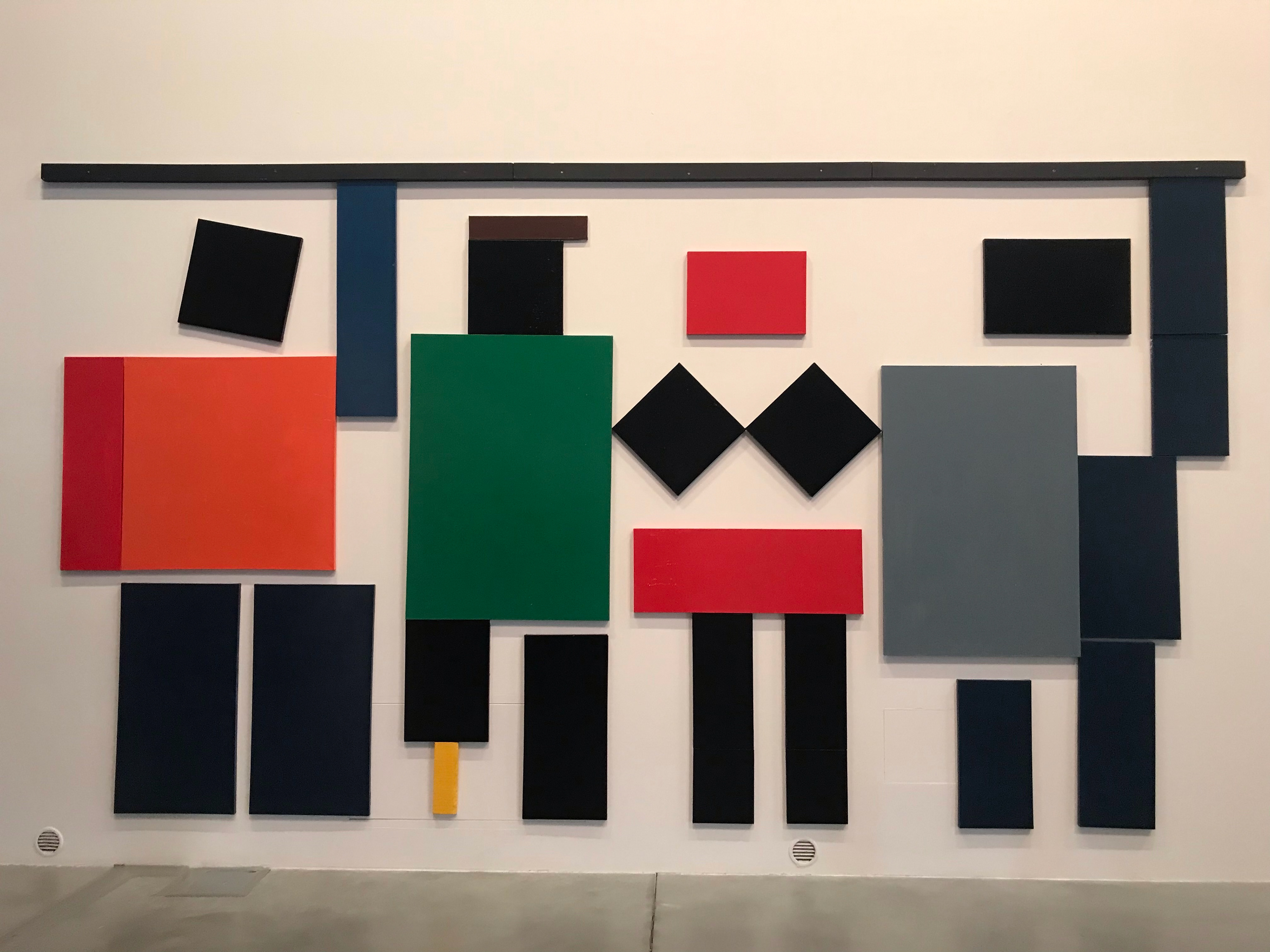
Day-trip to Prato; a city of about 200,000 only 17 kilometers north-west of Florence.
Our day started in the Piazza Santa Maria delle Carceri, situated between the Castello dell'Imperatore (Castle of the Emperor) and Santa Maria delle Carceri. The castle, built between 1237 and 1247, was constructed under the command of the King of Sicily Frederick II, Holy Roman Emperor. The views from the atop the castle walls show the sprawl of the surrounding city on one side and the hills of the Calvana Mountain range on the other.
Inside the Santa Maria delle Carceri church the floor plan is Greek-cross style; all four sides are equal length. According to Prato legend, a young boy saw a painting of Madonna and Child on the jail wall begin to move. After all the locals got in on this superstition, Lorenzo di Medici, lord of the Republic of Florence decided a basilica should be built on the site of the jail. Medici hired his favored architect Giuliano da Sangallo for the project and the church's interior was built between 1486 and 1495.
Next, we visited the Biscottificio Antonio Mattei cookie factory. Dating back to 1858 when Antonio Mattei opened a biscuit factory, this factory has been producing traditional Tuscan biscotti and other baked goods ever since. In 1904 the business was passed to the Pandolfini and Ciampolini families. As Prato became world-renowned for its textile production in the 1960's, Antonio Mattei biscottis grew in fame as well. Today, four Pandolfini siblings still run the business. The now famous blue-bags of sweets are still closed tied by hand. Recently, the've opened up a store front in neighboring Florence that I will have to go to after class one day. Having a biscuit hot off the line was an amazing experience.
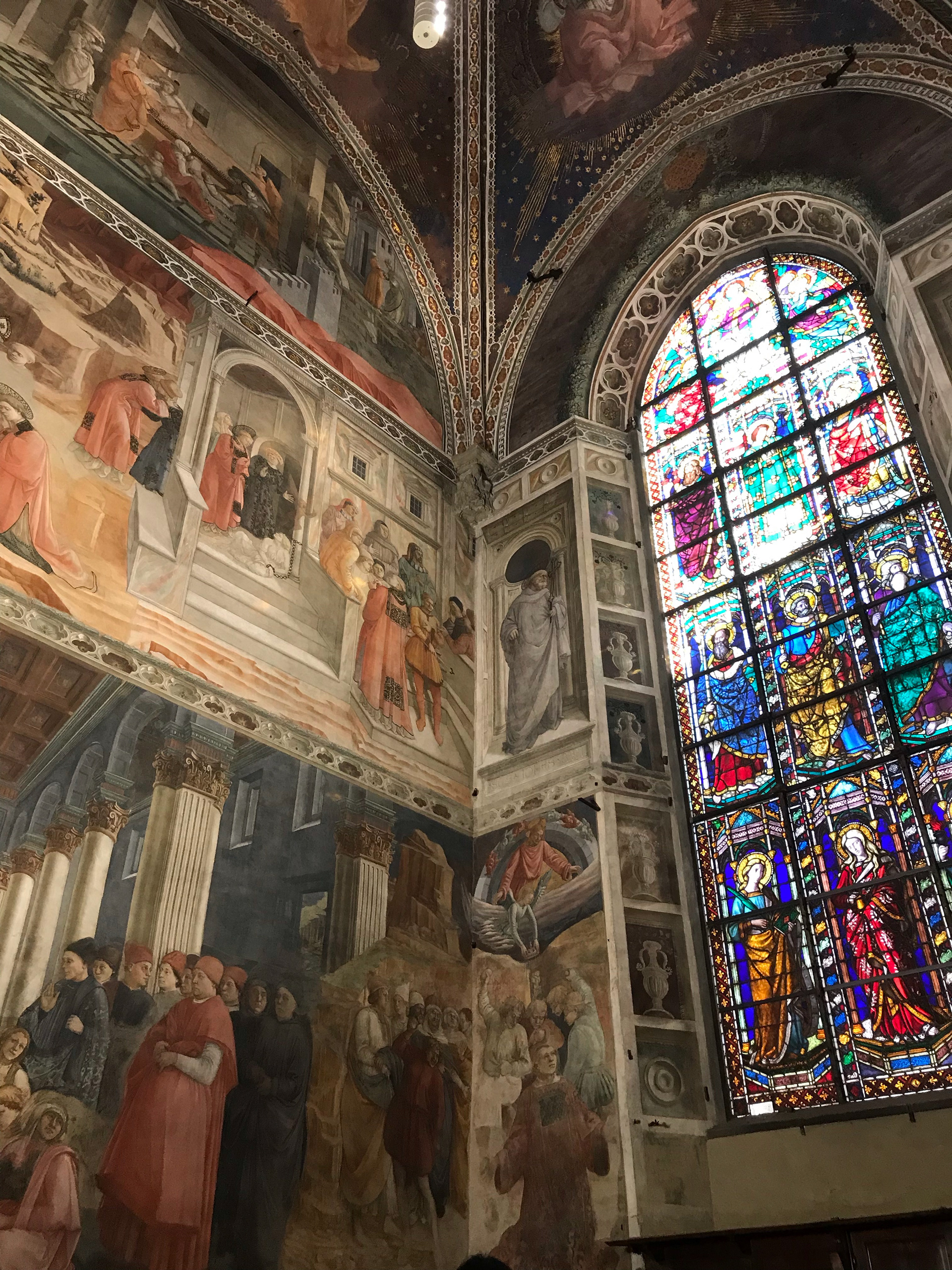
Following our biscuit break, we walked to the Cattedrale di Santo Stefano. The church site can be traced to as early as 994 AD. The exterior features the green and white marble so common in Tuscan architecture. In the main chapel, Filippo Lippi (1406-1469) and assistants painted a fresco depicting the Stories of St. Stephen and St. John the Baptist. While completing the painting, Lippi was involved in a scandal with the nun Lucrezia Buti, a model for several of the scenes. She gave birth to two children, Filippino Lippi and Alexandra. The family fled once the scandal broke out, but the two were allowed to marry under Pope Pius II's command. Under the new supervision of Carlo di Cosimo de' Medici, the painting was completed in 1465. The depictions cover 4,300 sq. feet in total and tell the stories of St. Stephen, the saint of Prato and St. John the Baptist, patron of Florence. The progress of St. Stephen's story is: Kidnapping of Newborn St. Stephen, St. Stephen Leaving, Stoning of St. Stephen, and Funeral of St. Stephen, which includes a self-portrait of Lippi. The story of St. John the Baptist is shown as Birth of St. John the Baptist, St. John the Baptist Leaving his family, Prayer and Predication in the Desert, Beheading of St. John the Baptist, and Feast of Herod portraying the presentation of the saint's head to Herodias as well as the dance of Salome, Herodias' daughter who requested the head of John the Baptist. Salome is thought to be a portrait of Lucrezia Buti, with whom Lippi had children.
After the church, we walked through Prato, passing a statue of Francesco Datini in Piazza del Comune. Datini, born in 1335 was an Italian banker and international merchant whose letters, documents, and account books found in 1870 give some of the best information on economics in the Middle Ages.
We continued our walk to the Prato Textile Museum. This museum documents the long history of Prato's most well-known industry - textiles. Embroidered and printed textiles produced from the 12th century onward are on display. The site of the museum started in 1326 as a fulling mill and was active until the 20th century. The brick boiler room from 1925 is shown within the museum. The current exhibition here is Pinocchio | In the Costumes of Massimo Cantini Parrini | From the Movie of Matteo Garrone. Over 30 costumes from the movie as well as historical garments from Massimo Cantini Parrini's personal collection are on display.
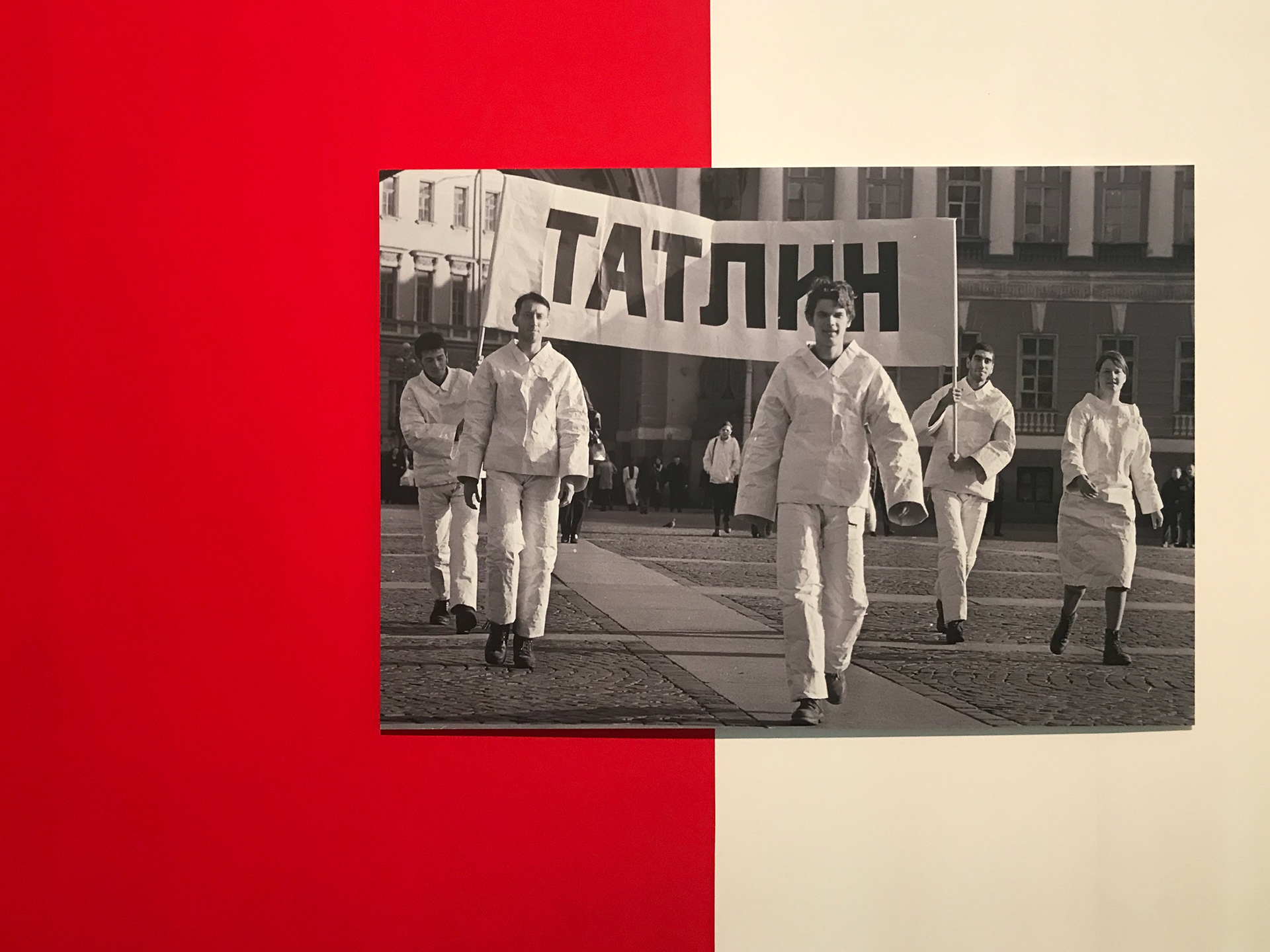
After a delicious lunch at Chef Republic, we crossed the street to Centro per l’Arte Contemporanea Luigi Pecci. The Pecci Center opened in 1988 as one of the first contemporary art museums in the region, contrasting greatly with all the traditional art and architecture of Florence. The center currently hosts three main exhibitions, one of which we spent the most time in. The Missing Planet: Visions and re-visions of 'Soviet Times' from the Pecci Centre's and other collections is the third Post-Soviet exhibition. Following Contemporary Russian Artists in 1990 and Progressive Nostalgia in 2007, this exhibition takes on the past, present, and future. An excerpt from the exhibition guide reads, "In the current cosmic space, in which the stars of ‘capitalism’ are free to move through their own orbits without pressure or friction from alien bodies, does it make sense to go back to the red planet? Does it make sense to wonder if a large chunk of time has now disappeared from the horizon or if, furthermore, it was never there –".
Also in the museum is Luca Vitone's Romanistan, a visual journey through Slovenia, Croatia, Serbia, Romania, Bulgaria, Macedonia, Greece, Turkey, Georgia, Armenia, Iran, and Pakistan to India. The journey follows the path that the Roma and Sinti people took from India to Italy, a migration that took place between the 8th and 14th centuries.
بيت Bayt, featuring the work of filmmaker Mario Rizzi, looks at the woman's identity in the Arab world, with themes of home and uprooting.
Prato's proximity to Florence make it appear as almost the same city. While Florentine's may think of Prato as inferior or maybe their "little brother", this town as a lot to offer and mixes the old and new very well.
February 7, 2020. Edited with Adobe Lightroom.
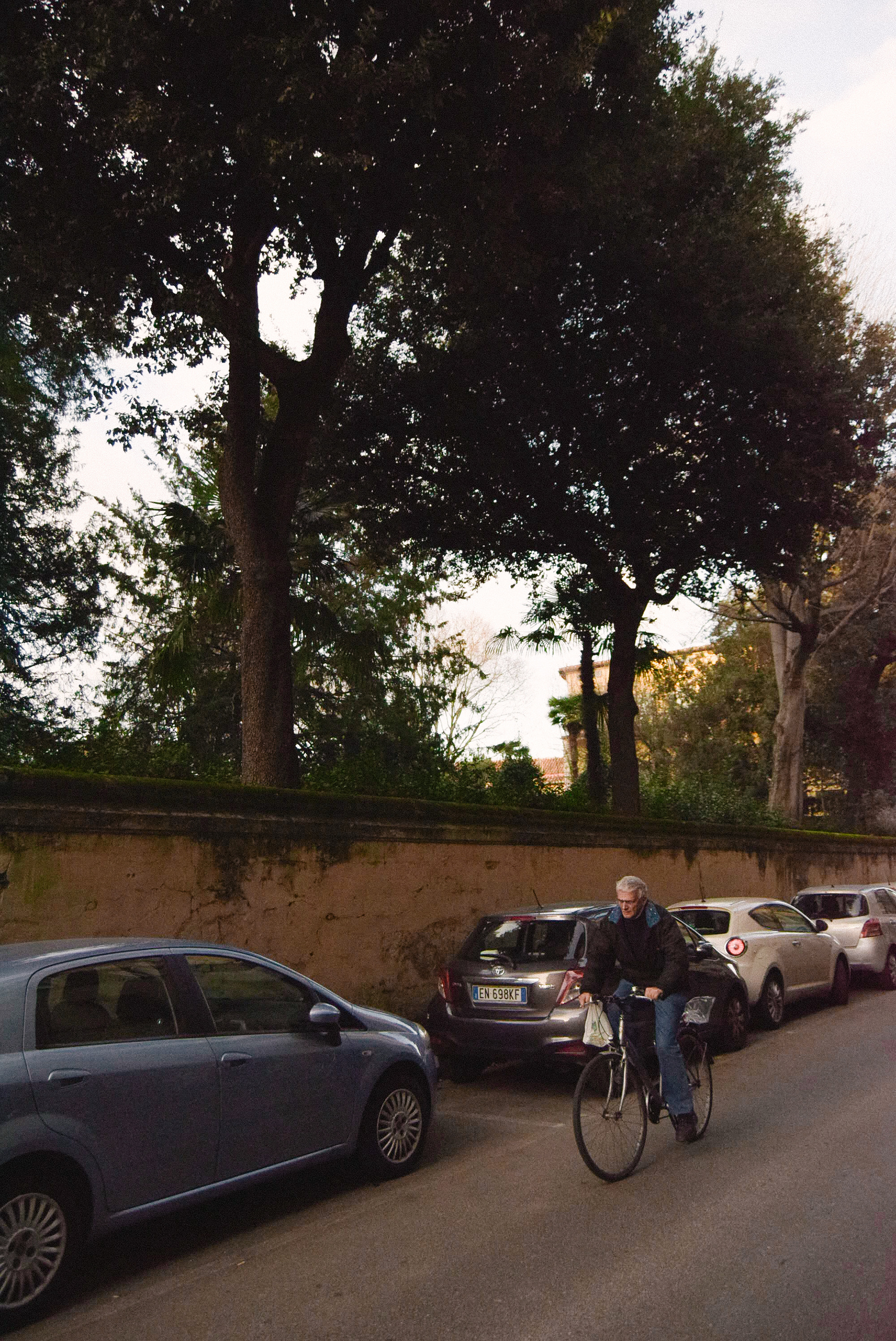
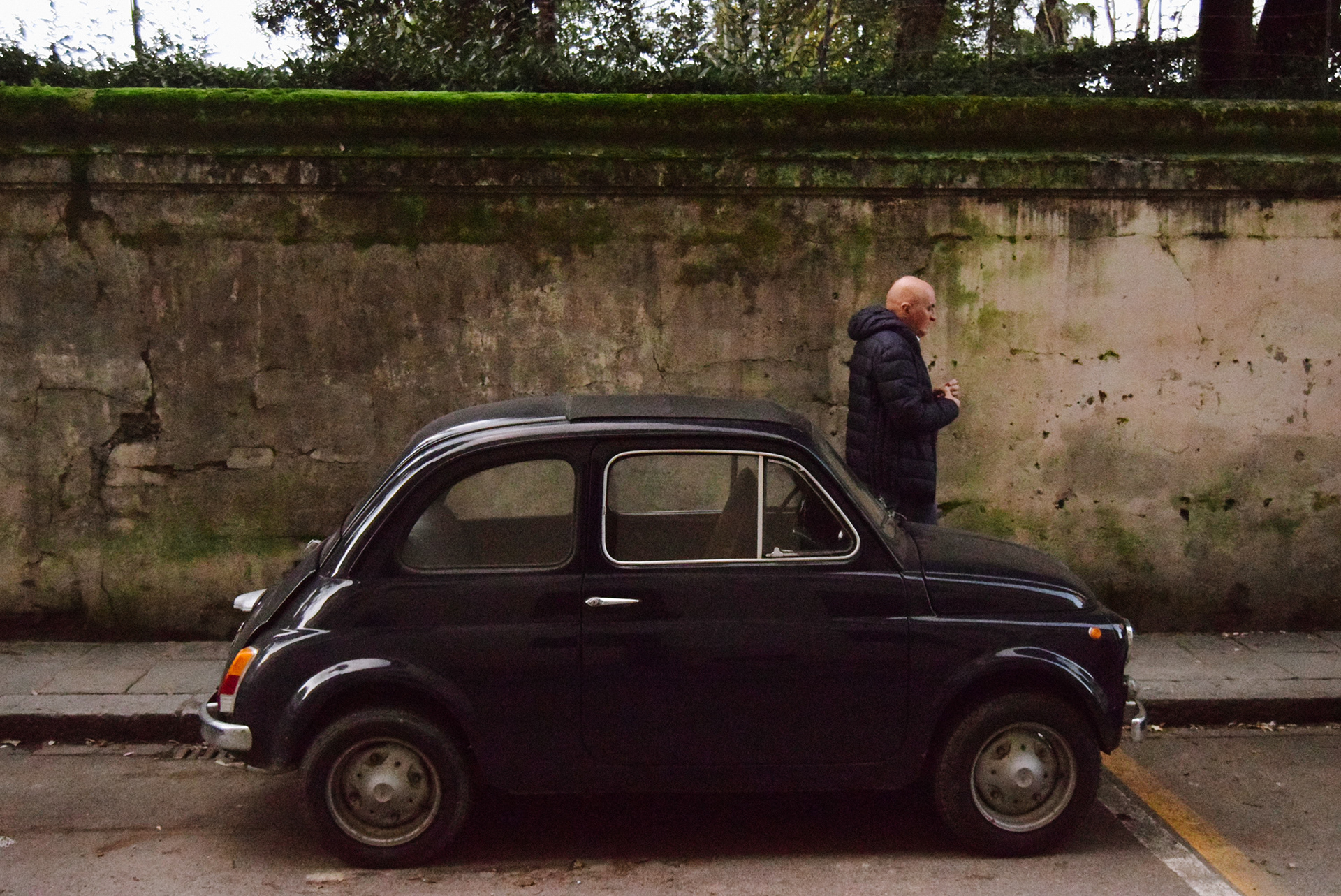
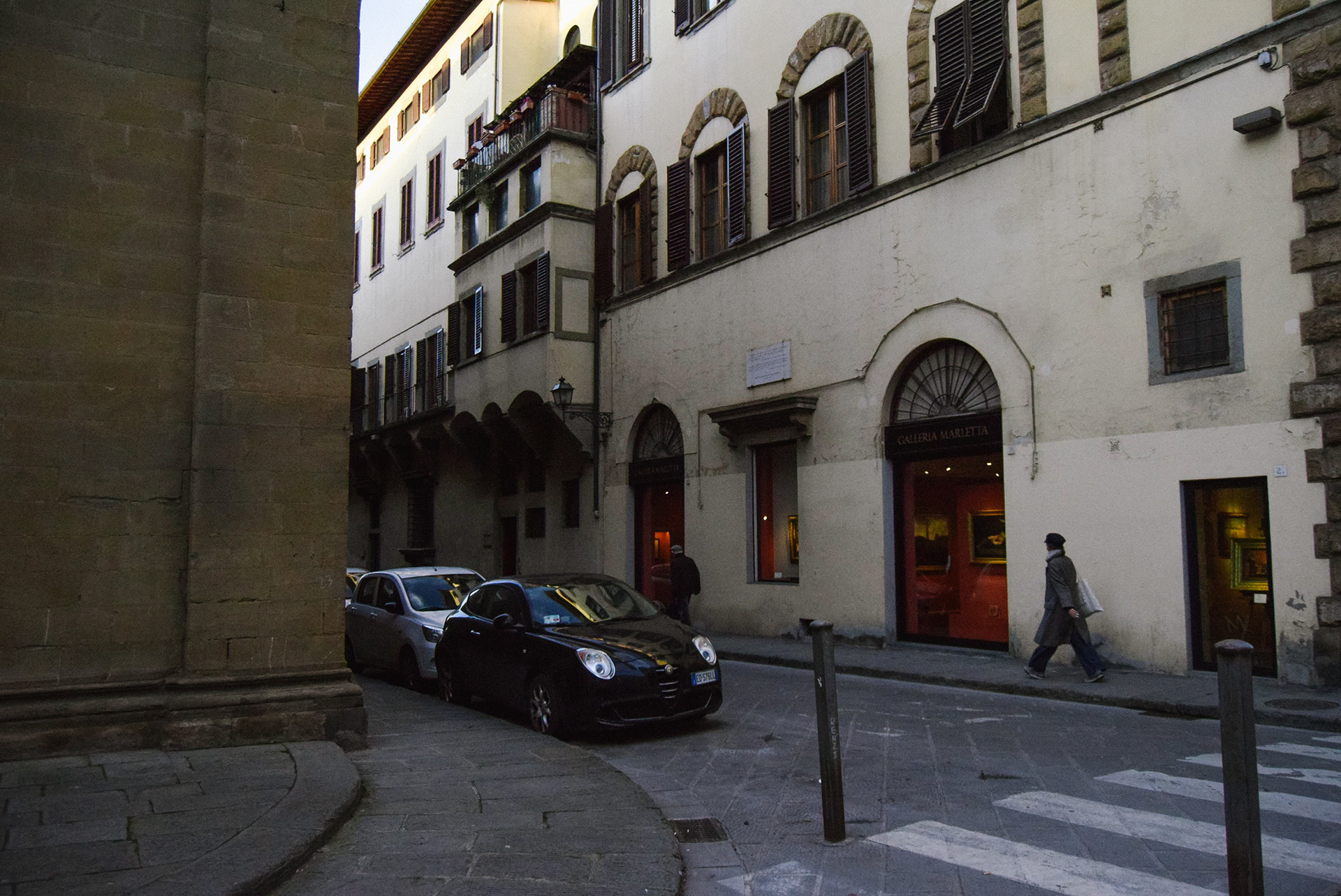
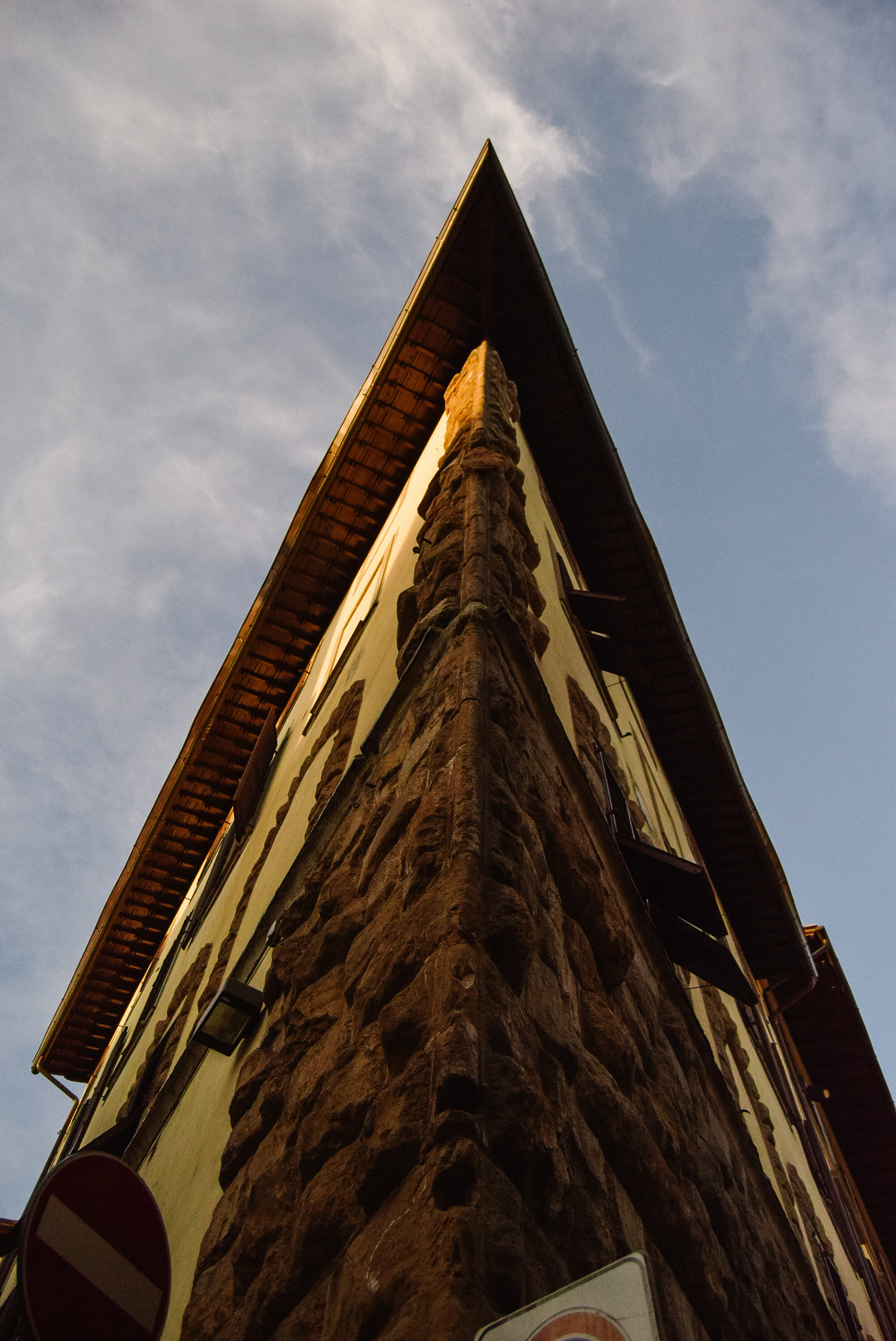
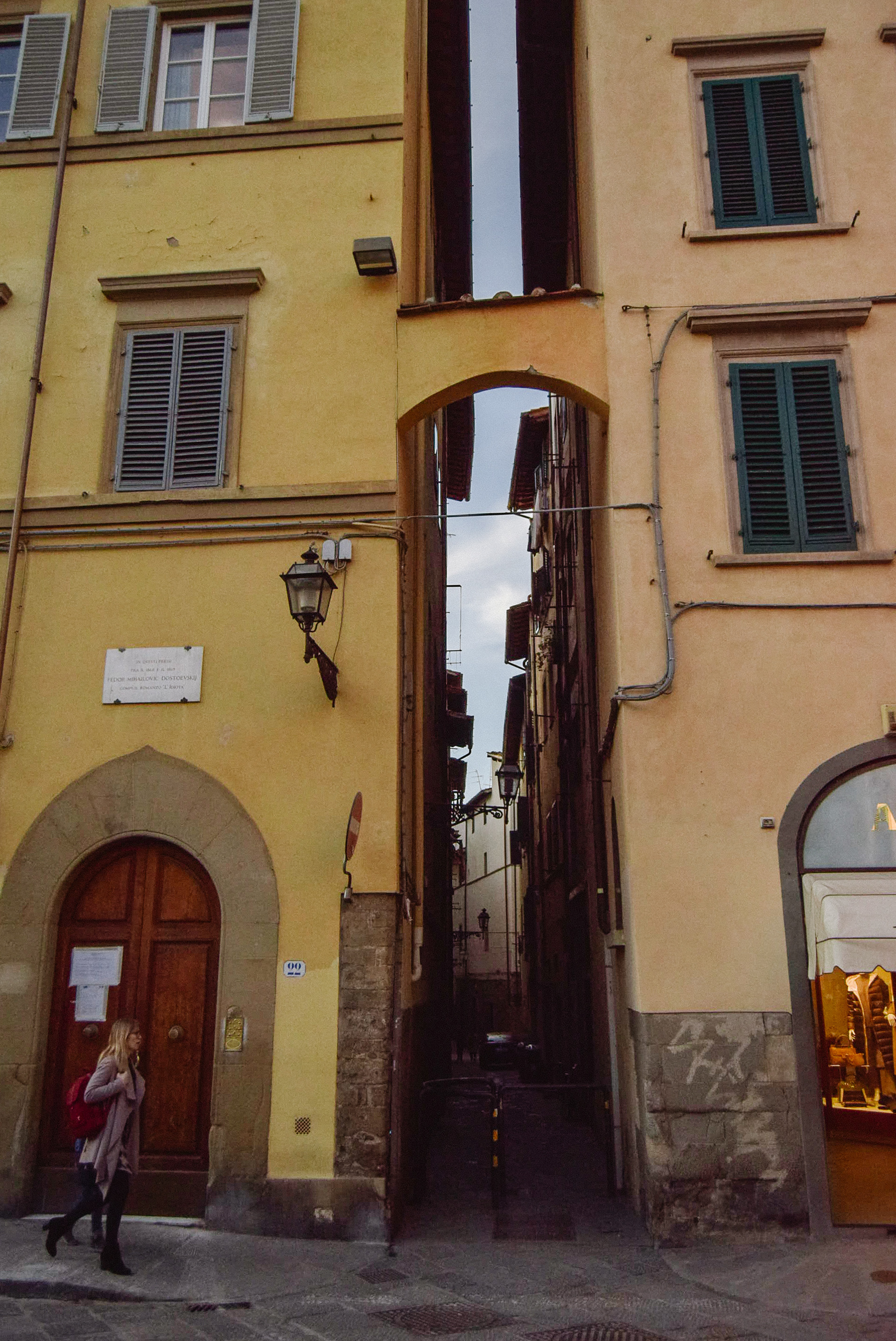
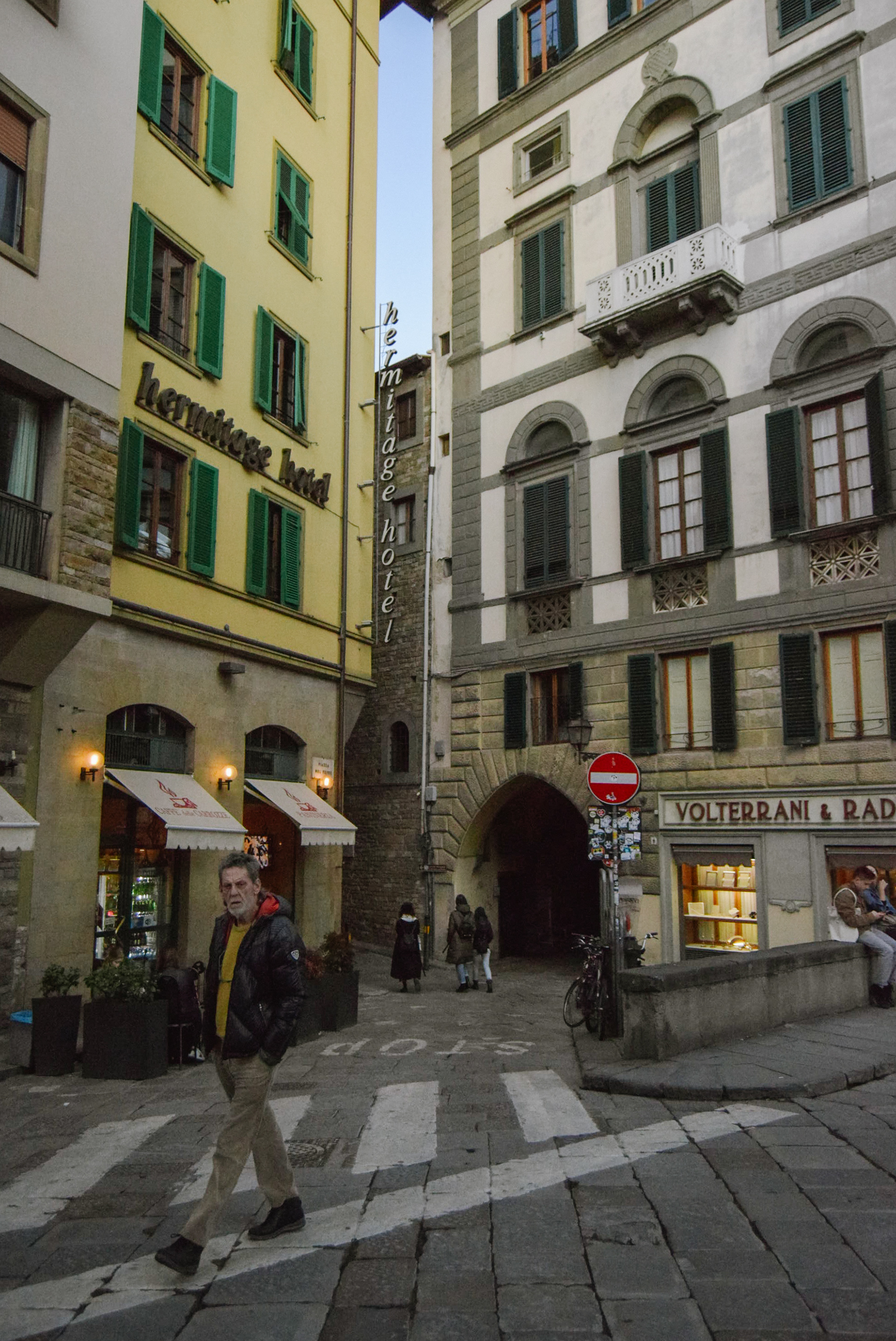
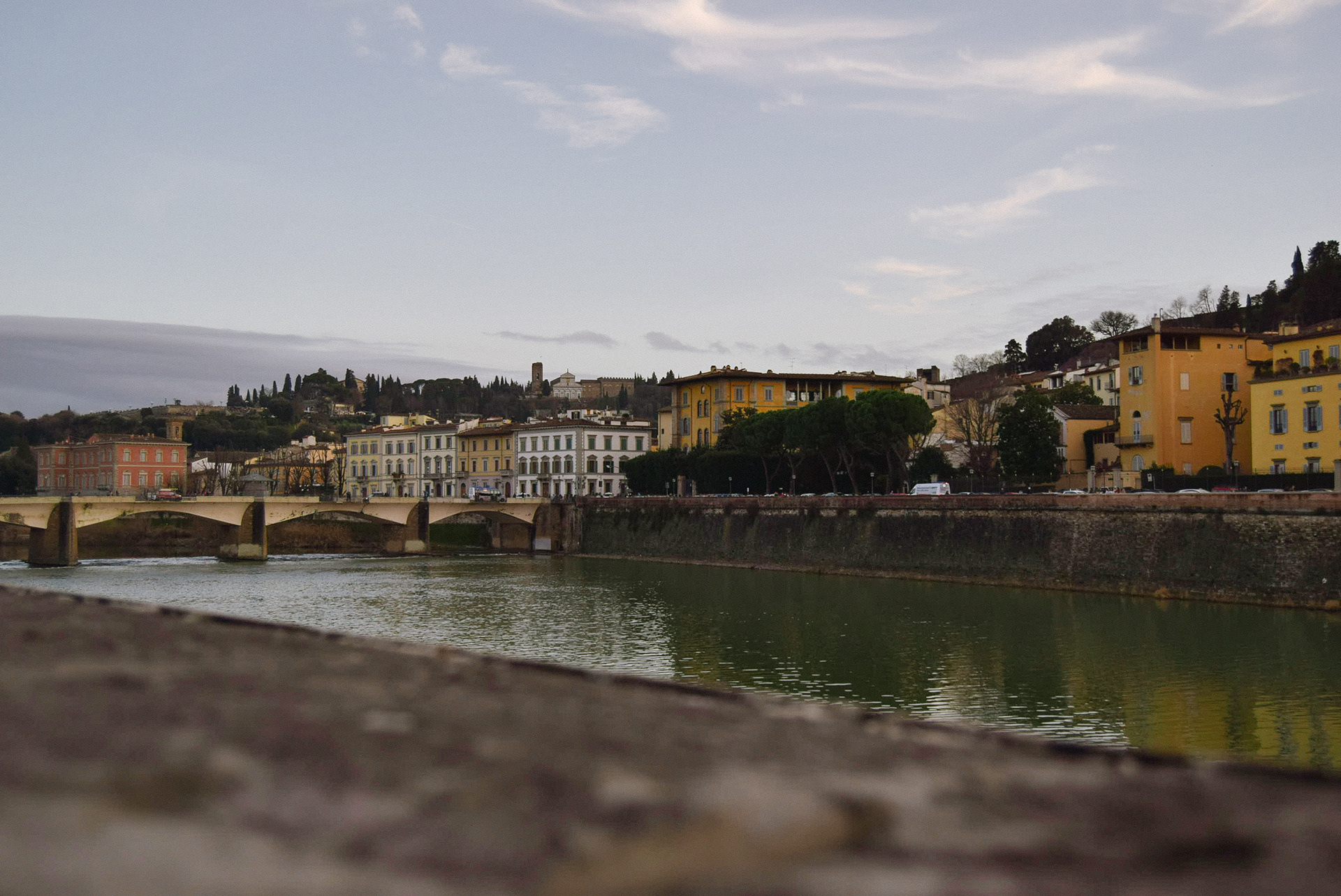
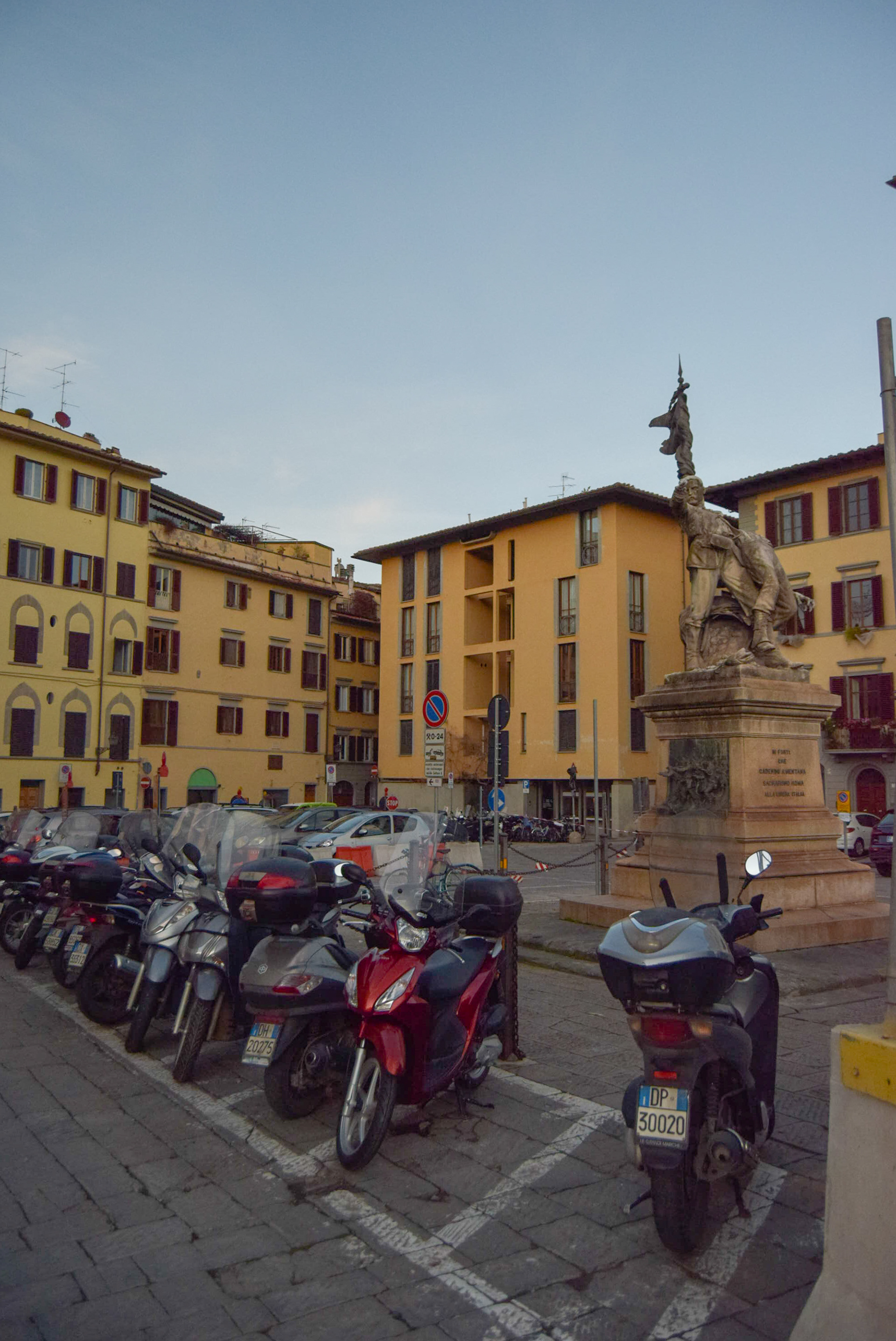
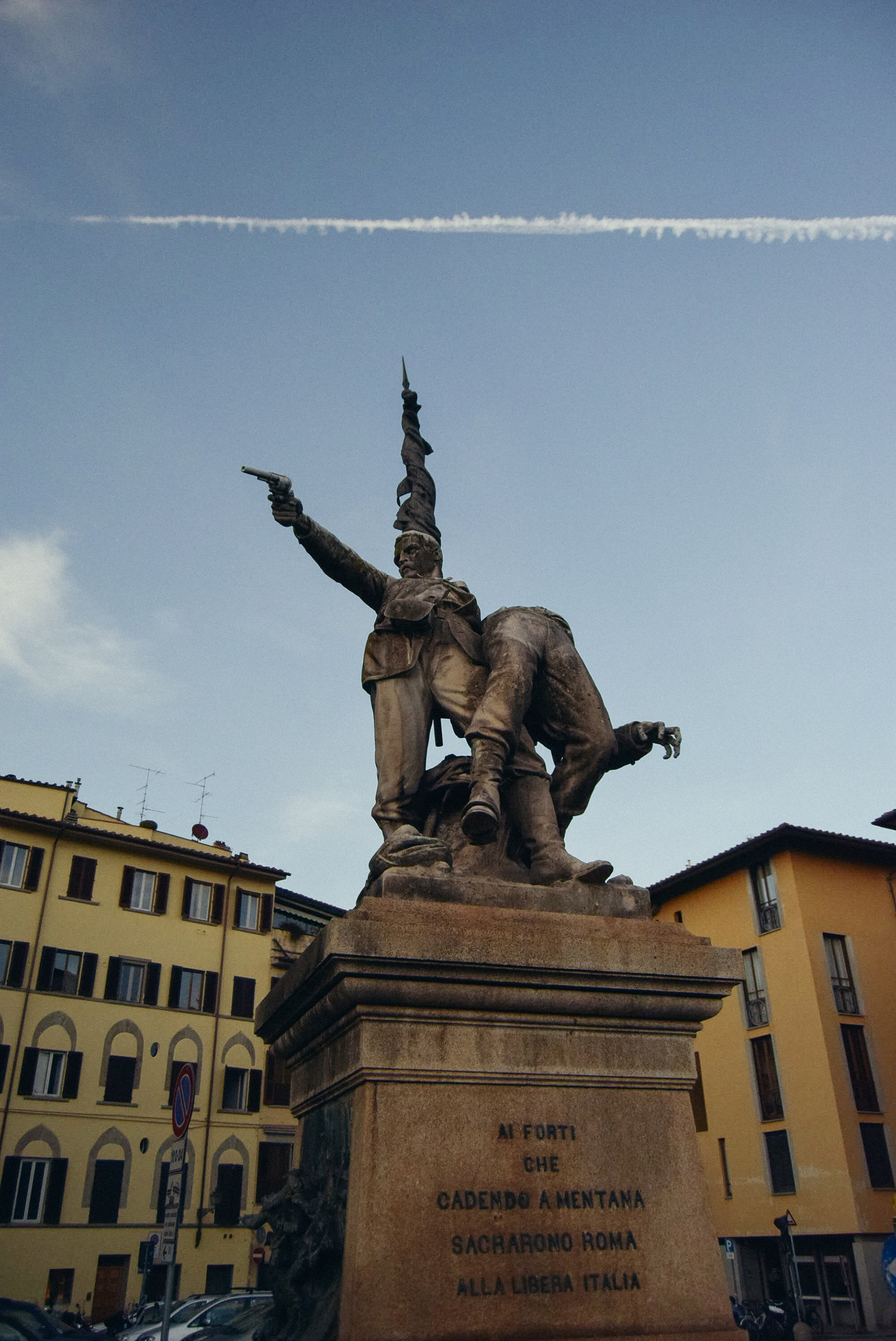
Walking around Florence, my new home for the next three and a half months or so.
Our apartment, which I share with two other roommates, is south across the Arno River. As I walk to class everyday, I take in the amazing views of the Ponte Vecchio.
January 30, 2020. Edited with Adobe Lightroom.